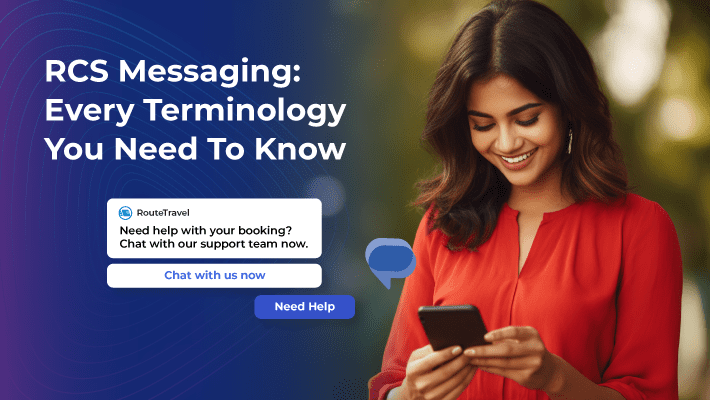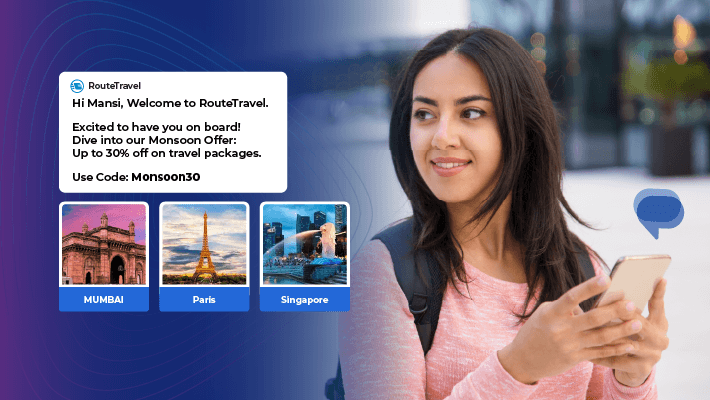
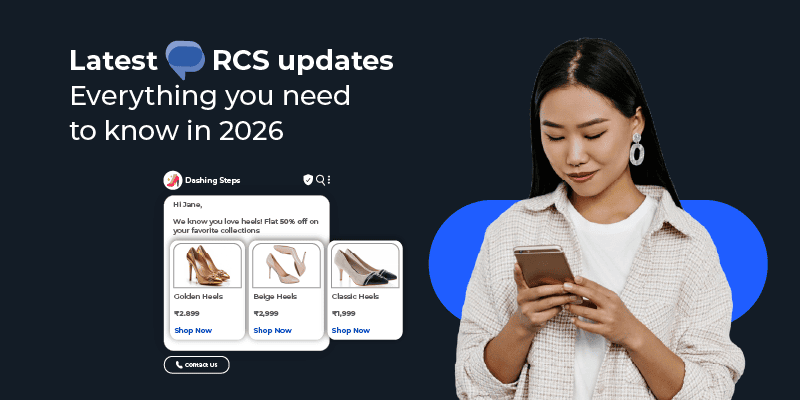
For years, RCS has delivered richer, more interactive, and useful business messaging. However, its reach has been limited by uneven device and carrier support in certain regions. That’s slowly changing. Apple’s support for RCS has expanded the addressable audience beyond Android, while its adoption continues to accelerate across key markets.
This article examines RCS at a glance: how it’s strengthening its footing, the top features driving adoption, its use-cases for businesses, and the challenges ahead. You can even explore the latest RCS updates here.
Apple’s RCS support: The iOS 18 turning point
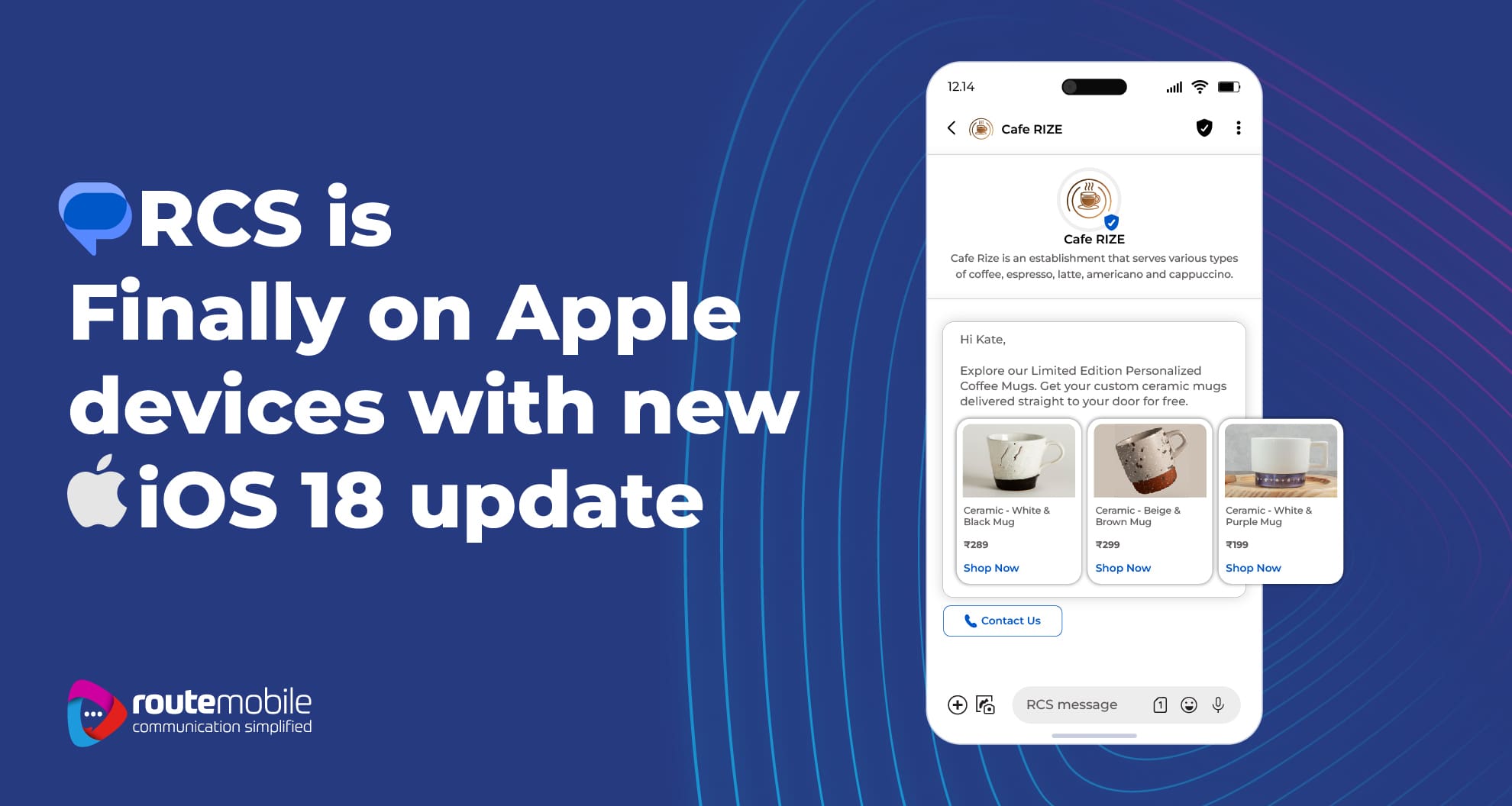
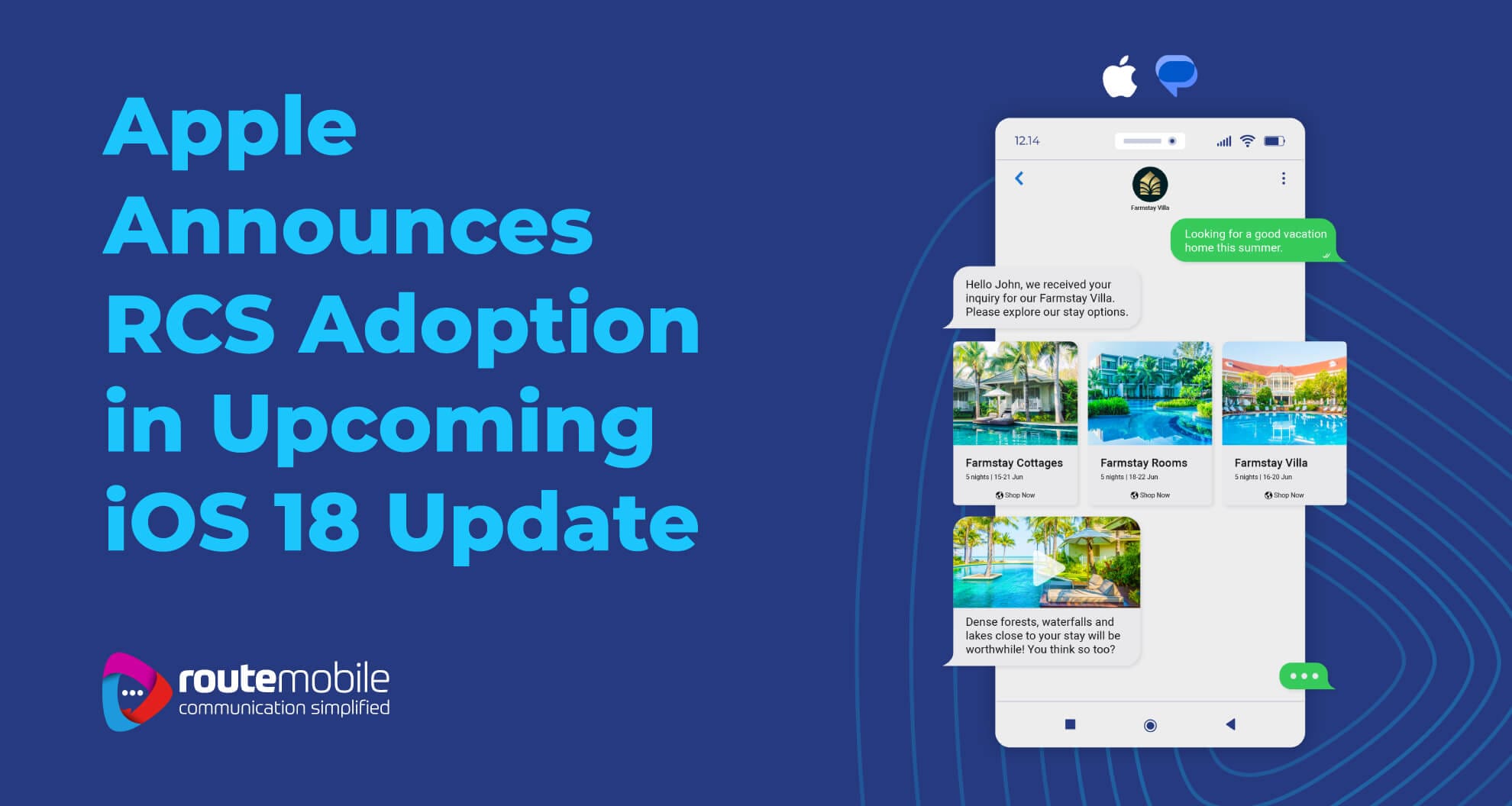
Apple’s RCS support, introduced in iOS 18, marks one of the biggest milestones in the evolution of rich messaging. For the first time, iPhone users can exchange high-resolution photos and videos, read receipts, typing indicators, improved group messages, and audio messages with Android users over RCS instead of falling back to SMS/MMS. While availability still depends on carrier and regional support, iOS 18 significantly expands the global addressable audience for RCS, making it a far more compelling channel for businesses looking to deliver consistent, cross-platform customer experiences.
Why RCS is gaining momentum in 2026
The latest RCS updates reflect a broader shift. The RCS Universal Profile 4.0 is the most comprehensive upgrade for users introducing new capabilities across devices and platforms bringing RCS closer to modern messaging apps:
Messaging Initiated Video Calls (MIVC)
MIVC enables users to escalate any RCS one-to-one or group messaging call seamlessly into a direct video call without app switching or link sharing. This first-time enhancement provides users with a smooth upgrade from text to real-time interaction, with full integration into the messaging thread. Up to 32 participants can be included within these conversations, making it ideal for consultations, guided sales experiences and more.
With MIVC, users can:
- join an ongoing call they couldn’t accept when it started
- synchronize MIVC logs within the chat timeline
- interoperate video calls across several types of devices and networks
MIVC creates a seamless path from chat to live interaction for businesses.
Rich text formatting and high-quality media sharing
Universal Profile 4.0 introduces expressive styling to RCS messages such as bold, italics, and strikethrough. Users can also exchange high-quality audio, video, and images because their devices can now identify media formats supported by their conversation partners. They can even select the most optimal encoding for the content being transferred.
Video streaming and link optimization in rich cards
Rich cards will support embedded streaming videos instead of requiring full content downloads. Businesses will also be able to exercise control over links and quick actions within the messaging apps such as viewing a restaurant menu. For more complex tasks, such as making a payment, the user will be directed to a dedicated application. All of this will happen while ensuring the security and privacy of the user. Additionally, business verification and deep link handling will now be more efficient and robust.
Top features driving RCS adoption
- Rich media experiences: Businesses can showcase product catalogues with high-resolution images, videos, and carousels directly in the native messaging app.
- Suggested actions and one-tap journeys: Suggested replies and interactive buttons enable users to complete actions, such as appointment confirmation or checkout, without leaving the messaging thread.
- Two-way conversational experiences: Basic text messages turn into interactive two-side chats with read receipts, typing indicators, quick replies, and tappable buttons inside the user’s native messaging inbox, making conversations personal and richer.
- Verified sender profiles: 88% of consumers trust a message that features a verified company badge, reinforcing their trust in the brand and protecting them from phishing and spoofing attacks.
How businesses are using RCS today
The global RCS for Business (RBM) traffic is projected to reach 200 billion messages by 2029 due to its growing popularity among users. From customer support to travel and hospitality, businesses are implementing RCS for diverse use-cases:
- Customer service: Support interactions take place in branded threads equipped with quick-reply buttons and automated AI chatbots for real-time troubleshooting.
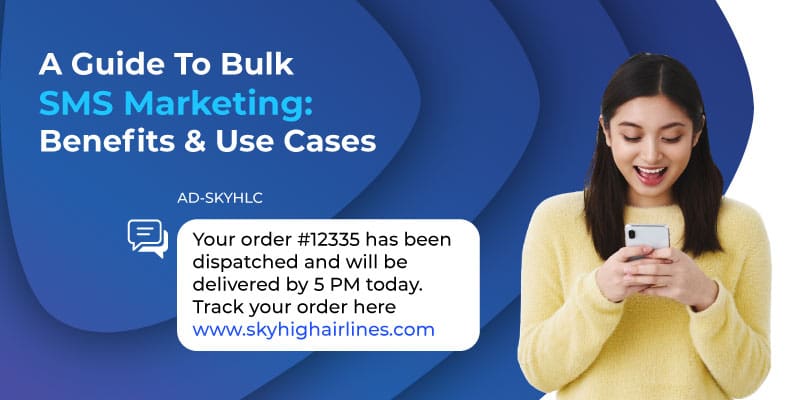
- Transactional updates: From purchase confirmations to shipping notifications and other product-related information, businesses can send direct alerts to customers.
- Marketing campaigns: With new offers, promotions, discounts, product/service upgrades, and abandoned shopping cart reminders, businesses can raise customer awareness, engagement, and sales.
- In-chat bookings and appointment scheduling: Brands in the travel and hospitality industry are transitioning to highly engaging, two-way conversational experiences to drive action. For easy booking experiences, they use high-resolution images, carousels, and quick action buttons; for reminders, they use quick-reply buttons for confirmation, rescheduling, or cancellation.
RCS and AI: The next major evolution
When we combine AI with RCS, we can enable meaningful, personalized, and engaging interactions throughout the customer journey, all inside the native messaging app. Here’s how AI is transforming RCS:
- Personalized messaging: By analyzing customer data, preferences, and past interactions, AI can help draft hyper-personalized messages that resonate with a customer’s needs and interests. Additionally, AI can also craft compelling brand messages, suggest effective images or videos, and even A/B test different creative styles to automate and optimize campaign performance.
- Smarter automation: Using AI-powered automation, brands can offer instant, round-the-clock support for diverse customer inquiries by leveraging Natural Language Understanding (NLU). This frees human agents to focus on more complex issues while AI agents resolve routine customer queries instantly.
- Dynamic customer interactions: AI-led customer interactions are more dynamic as they allow customers to inquire, clarify information, and get immediate, relevant responses. Backed by sentiment analysis, AI can even detect the emotional state of a customer instantly, leading to an immediate escalation to a human agent if needed.
- Proactive conversations: AI can anticipate customer requirements and start proactive interactions. For instance, AI can detect a potential issue with a purchased product and notify the customer about the same with an RCS message, highlighting the solution or offering instant support, before the customer even notices the problem. This farsighted approach builds customer loyalty while promising effective customer care.
- Fraud prevention: AI can effectively detect and prevent fraud, spam, and phishing attacks, extending security to both businesses and their customers.
Challenges that remain for RCS
RCS faces key adoption and security hurdles, including:
- Varying carrier support: Adoption speeds differ across carriers and geographic regions based on local device footprints, leading to a fragmented ecosystem. Differences in how carriers render RCS elements also cause uneven user interactions as they support different features.
- Regulatory compliances: Strict rules, including “one brand, one bot” and varying carrier whitelisting requirements create onboarding issues for enterprises. Additionally, verifying sender identities across global regional networks can delay campaigns.
- Fraudulent attacks: Threats continue to evolve, from conversational scams that redirect victims through multi-step chats to disguised URLs inside images or extra characters designed to bypass spam filters.
- Fragmented user awareness: Customer awareness and therefore adoption of RCS is essential for businesses to maintain high engagement rates.
What does the future of RCS look like?
- Wider business adoption: By the end of 2026, the active RCS user base is estimated to reach 3.8 billion, accounting for 40% of the global mobile subscribers. In addition, the global mobile operator revenue from RCS is projected to rise to USD 6.5 billion by 2030.
- Deeper AI integration: AI bots will live inside your messaging threads to summarize long chats and draft replies. They will automatically detect dates or flight details to create calendar events or track delays without leaving the app.
- Enhanced commerce in messaging: Users will unlock native shopping experiences, browsing products directly inside the chat, processing in-app payments securely, selecting flight seats or hotel rooms via carousels, and receiving real-time map updates within the chat.
- Further Android-iPhone improvements: Cross-platform sharing of content (including videos) will become seamless along with tapback responses. End-to-end encryption will span both operating systems.
- Increased verification requirements: Cryptographic checkmarks will visually confirm a sender’s legitimacy, and carriers will deploy automated filters to block spoofed brand names. Pre-approved message layouts will help prevent unauthorized promotional spam.
Why every business should prepare for RCS now
- Changing consumer expectations: Consumers prefer interactive experiences with visual, personalized, and app-like content over static messages. Verified sender profiles, backed by official brand names, logos, and checkmarks, reduce fraud concerns and build confidence among consumers. Moreover, product carousels, payment buttons, and suggested replies allow users to complete the check-out process without opening external browsers.
- Messaging is now a primary engagement channel: Mobile messaging is one of the most direct channels that customers expect brands to use every day. With RCS, businesses can engage customers with rich media, interactive buttons, and two-way conversations driving useful experiences, from browsing products to resolving support queries directly within the messaging thread.
- Competitive advantage for early adopters: Businesses adopting RCS can differentiate themselves from competitors relying on plain-text SMS or emails. Moreover, it helps them to build greater visibility, stronger trust, higher engagement, and valuable performance data.
In short, preparing for RCS now allows businesses to establish a distinctive and engaging messaging presence among customers.
Want to jumpstart your RCS journey? Reach out to us today:
https://routemobile.com/products/enhanced-business-messaging/rcs-business-messaging/
FAQs
What RCS features does the iPhone support now?
iPhones support core RCS features, including high-resolution photos and videos, delivery and read receipts, typing indicators, audio messages, links, longer text messages, group messaging, and richer cross-platform conversations. However, its availability depends on the iOS version, carrier and market, with SMS fallback where RCS can’t reach.
Is RCS replacing SMS?
RCS is upgrading SMS, not replacing it. While RCS enables richer, interactive messaging, SMS still remains the universal fallback wherever RCS isn’t available.
What is the difference between RCS and WhatsApp?
RCS is a carrier-native protocol built into a phone’s default text messaging app while WhatsApp is a standalone application offered by Meta (which needs to be installed separately). RCS falls back to SMS automatically where the recipient lacks an internet connection or RCS support while WhatsApp works entirely on Meta’s dedicated servers over WiFi or cellular data.
Is RCS secure?
RCS is more secure than SMS, but isn’t always end-to-end encrypted (E2EE). While business messages under RBM (RCS for Business) are encrypted in transit but not E2EE; person-to-person messaging supports E2EE when enabled by compatible devices, apps, and carriers.
Can businesses use RCS for marketing?
Yes, businesses can use RCS for marketing. From promotional offers and discounts to abandoned shopping cart reminders and more, businesses can run diverse marketing campaigns.
What industries benefit most from RCS?
The industries benefitting the most from RCS are retail and e-commerce, banking and fintech, healthcare, telecommunication, travel and hospitality, logistics and delivery, media, entertainment and events.
Does RCS work internationally?
Yes, RCS works internationally though its availability is dependent on the market and carrier.
Conclusion
RCS is moving from promise to practice: with Universal Profile 4.0, cross‑platform support, and accelerating carrier rollouts, it now offers app‑like experiences inside the native inbox at global scale. For businesses, the opportunity is clear: richer conversations, higher trust, and measurable outcomes, provided they navigate fragmentation, compliance, and evolving security threats. The brands that prepare now will shape the next era of conversational commerce.