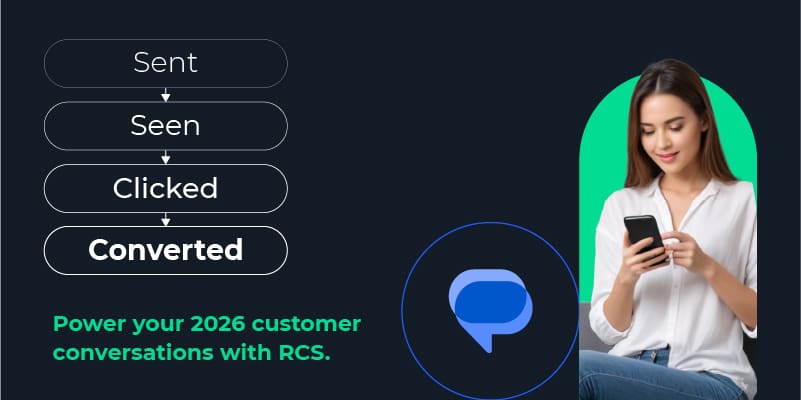
Know how rich messaging turns simple promotions into branded rich conversations that help convert- all within the messaging inbox
Why messaging is at a crossroads in 2026
In 2026, brands face a simple but profound challenge: customers receive more notifications than ever, yet attention has become harder to win. With mobile messaging still central to customer engagement, enterprises are asking a critical question: are their messages being seen and acted on, or simply delivered?
Messaging open rates have historically ranked far higher than email, making mobile messaging a powerful engagement channel. However, customer expectations are evolving. Audiences now want richer, more interactive experiences, including visuals, buttons, guided replies, and two-way conversations that go beyond plain text.
Around 68% of telecom operators report rising user preference for interactive messaging over SMS, as customers seek more dynamic and engaging experiences on their phones.
What is RCS messaging and why adoption is accelerating
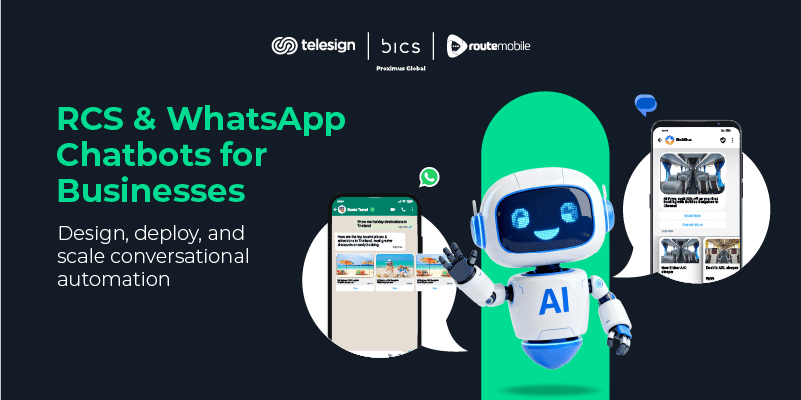
Rich Communication Services (RCS) combines the simplicity of native messaging with rich, app-like features that includes branded cards, high-resolution media, interactive buttons, suggested replies, verified business profiles, and deep analytics.
Business adoption is accelerating rapidly. Global forecasts predict RCS will reach approximately 3.8 billion users by 2026, representing nearly 40% of all mobile subscribers, with the RCS market expected to grow to around $12.28 billion by 2027 (Allied Market Research). For brands, RCS offers a way to meet rising expectations without forcing customers to download or switch apps.
Why traditional SMS messaging is no longer enough
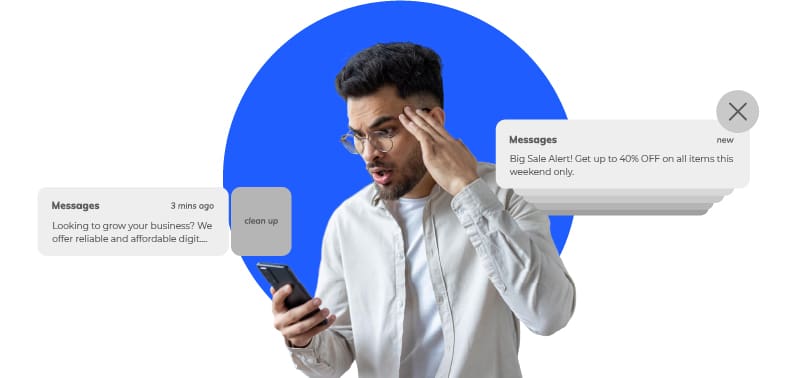
Despite strong delivery rates, traditional SMS struggles to drive meaningful action. Enterprises commonly face four challenges.
Optional caption:
RCS transforms plain-text SMS into rich, interactive, branded conversations.
Message delivery does not guarantee engagement
- The challenge: Plain-text messages often blend into crowded notification screens and are easily overlooked.
- The RCS advantage: Rich visuals, brand identity, and interactive elements help messages stand out and significantly increase the likelihood of customer interaction.
Friction in the customer journey reduces conversions
- The challenge: Links that send customers outside the inbox create friction through app switching, logins, and extra steps.
- The RCS advantage: RCS enables actions inside the conversation itself. Buttons such as confirm, track, book, buy, or reply guide users without leaving the chat.
Unbranded messages reduce trust
- The challenge: Generic sender IDs make customers hesitant, especially for sensitive communications like financial updates or appointment reminders.
- The RCS advantage: Verified business profiles, logos, and branded message threads build trust and credibility instantly.
Limited analytics prevent optimization
- The challenge: SMS typically offers limited insight beyond delivery confirmation.
- The RCS advantage: RCS provides detailed analytics on opens, clicks, interactions, and conversions, enabling continuous improvement.
How RCS drives higher engagement and conversions
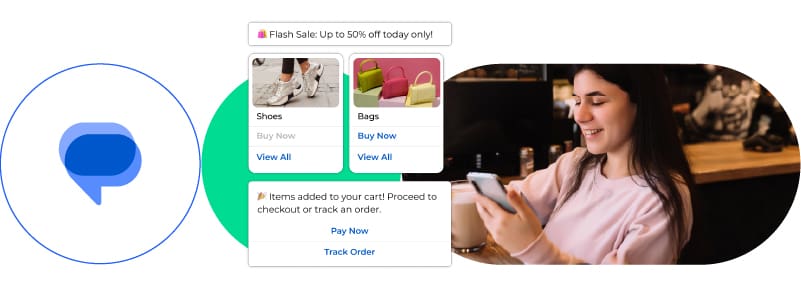
Industry data shows that rich, interactive messaging consistently outperforms static text across the customer journey.
- 140% higher conversion rates than SMS
- 74% of customers prefer RCS when engaging with brands
- 35x higher read rates than email
- 6.2x higher ROI compared to other conversational channels
As a result, enterprises are increasingly combining RCS with chatbots and automation to create seamless, guided conversations at scale.
The shift is clear: brands are moving from one-way alerts to meaningful two-way engagement.
What RCS messaging looks like in action
Measurable business outcomes with RCS messaging
Brands adopting RCS are already seeing:
- Higher engagement through rich, interactive content
- Stronger conversion performance compared to SMS
- Clear visibility into customer behavior and interaction paths
- More seamless, end-to-end customer journeys
The future of business messaging starts now
Messaging in 2026 is no longer about sending information. It is about creating frictionless, interactive experiences that customers notice, trust, and act on.
RCS enables brands to move beyond “sent” to seen, clicked, and converted, all within the messaging inbox. With adoption accelerating and engagement metrics outperforming SMS, now is the time to rethink how brands connect with customers.