
Conversational commerce in India gained traction around 2020-2022 with WhatsApp Business API launches, evolving from basic messaging to AI-integrated flows. By 2023, platforms introduced real-time shopping bots, while B2B marketplaces became hubs for 45 crore conversations yearly. From 2023-2026, tier 1 adoption exploded, with a 17.8% CAGR fueled by UPI payments and GenAI. (fmi)
This matters enormously in modern retail because consumer expectations have evolved. Today’s shoppers, particularly in India’s Tier-1 cities, want immediacy, personalization, and frictionless experiences. They want to ask a question and get an answer within seconds. They want to see a product, confirm availability, pay, and receive a confirmation, all without ever leaving their messaging app.
What is conversational commerce?
Conversational commerce enables businesses to engage customers through natural messaging on platforms like WhatsApp, blending conversation with transactions. In tier 1 cities like Mumbai, Delhi, and Bangalore, this approach has surged in B2B contexts, prioritizing lead nurturing, support, and deal closure over pure shopping.
India’s social commerce market, valued at $1.5–2 billion today, is projected to reach nearly $70 billion by 2030. (Bain)
- Over 50% of Indian users prefer conversational platforms for high-frequency transactions like banking, bookings, and bill payments
- 90% of non-savvy digital users favor SMB interactions via conversational channels for daily needs
- 70% prefer messaging local grocery stores to place orders
- 65% use messaging to connect with restaurants for offers and food orders
- 80% prefer conversational platforms for service tickets, warranties, and technician visits (Bain & Meta)
India’s conversational commerce platform ecosystem
With over 800 million internet users, India is Meta’s single-largest market across WhatsApp, Instagram, and Facebook (economictimes), and in urban Tier-1 cities like Mumbai, Delhi, Bengaluru, Hyderabad, and Pune, WhatsApp penetration among smartphone users surpasses 70%. This isn’t merely a communication tool; it has quietly become the country’s most powerful conversational commerce platform.
- 60% of WhatsApp users in India message a business weekly
- 54% prefer WhatsApp for marketing communications and order updates
- 72% are more likely to engage with personalized WhatsApp messages
- 85% want proactive brand communications on WhatsApp (Bain & Meta)
For brands and retailers targeting urban India, ignoring WhatsApp is no longer a strategic option. The question is no longer whether to use conversational commerce; it’s how to do it well.
WhatsApp e-commerce and payments
WhatsApp e-commerce thrives in B2B with catalogs and in-chat payments via UPI, achieving 45-60% conversions versus 2-5% traditional sites. WhatsApp payment integrations like Razorpay enable seamless transactions in tier 1, supporting utility bills and invoices. WhatsApp conversational commerce and WhatsApp shopping focus on post-sale support, reducing churn. (fmi)
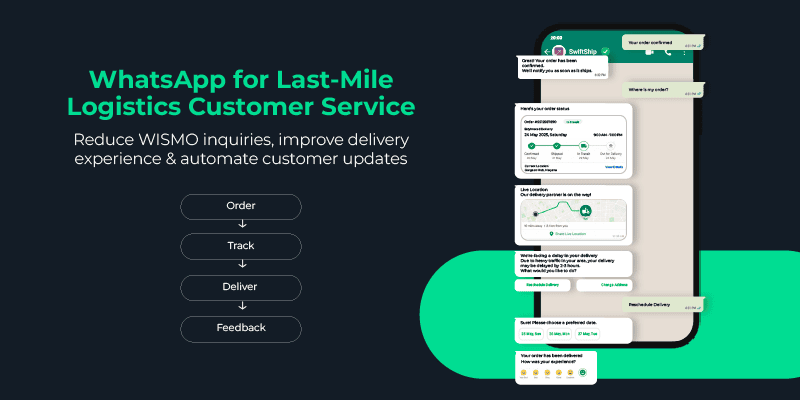
In B2B, WhatsApp e-commerce facilitates supplier catalogs, bulk order placement, and automated invoicing with payment links. Features like live delivery tracking via GPS sharing and post-purchase support reduce churn by 68% in tier 1 cities. Conversational commerce in retail with CRM/ERP systems further enhances inventory updates and deal closures.
B2B conversational commerce use cases
| Industry | Use Cases |
| Fintech/BFSI | KYC verification, loan status, fraud alerts, payment reminders |
| Manufacturing | Supplier orders, inventory updates, compliance chats |
| SaaS/Tech | Demo scheduling, product config, support tickets |
| Retail (B2B wholesale) | Catalog sharing, order confirmation, feedback |
| Services (Real Estate/Edu) | Appointment booking, document sharing |
Why does WhatsApp commerce work in India?
Exceptional reach and engagement
No other digital channel in India commands WhatsApp’s combination of scale and engagement.
For Tier-1 city brands, this translates directly into a pipeline. WhatsApp ensures the message is actually seen and seen quickly. Around 88% of WhatsApp messages are read within five minutes of delivery. (e4m/Facebook)
Convenience and familiarity
Tier-1 Indian consumers are digitally sophisticated but time-poor. They juggle work, commutes, and packed schedules. WhatsApp fits seamlessly into this lifestyle because it’s already open. The average Indian WhatsApp user spends approximately 38 minutes per day on the app. There is no new interface to learn, no account to create, no app to download. The familiarity of the chat interface significantly reduces cognitive friction.
Conversational commerce on WhatsApp meets users precisely where they already are. This convenience directly drives conversion, which is why businesses using WhatsApp for eCommerce in India report conversion rates of 45–60%. (e4m)
Language and local preferences
India’s linguistic diversity is often cited as a barrier to digital commerce. WhatsApp helps bridge it. The platform supports multiple Indian languages
Beyond language, there is a deeper cultural alignment. India’s bazaar culture is built on conversation, where customers ask questions, seek reassurance, and negotiate before committing to a purchase. WhatsApp replicates this dynamic digitally.
Customer journey from discovery to checkout on WhatsApp
Product discovery within chat
Conversational commerce on WhatsApp begins at the very top of the funnel. Turning our eyes to social media platforms like Facebook and Instagram, which collectively host over 5.7 billion users, the opportunity is massive.
Businesses can instantly open a WhatsApp conversation when a user taps an ad, shortening the distance between interest and conversation. CTWA can be tracked within the Facebook Ads Manager, which enables brands to access revenue metrics such as conversions; calculate total ad spend, ROAS (Return on Ad Spend); and analyze factors affecting ROAS.
This data allows for testing, iteration, and optimization of campaigns in the future. Businesses can engage and re-engage with customers, resulting in enhanced marketing performance and substantial cost savings.
15 million SMBs use WhatsApp for Business to build digital presence and drive traffic via click-to-chat ads. (Bain & Meta,2024)

Once inside the chat, product discovery happens through WhatsApp’s native catalog feature. Businesses can showcase entire product lines with images, descriptions, and prices.
Over 40 million customers view business catalog on WhatsApp every month globally, reflecting how comfortable shoppers have become with in-chat browsing.
Personalized support and sales assistance
WhatsApp commerce shines by recreating the helpful guidance of an in-store sales assistant right in your chat. It pulls together details like your customer name, location, past purchases, and previous support queries to tailor every interaction, whether it’s a targeted promo, spot-on product suggestion, or real-time order update. This personal touch boosts satisfaction, encouraging repeat visits and fostering genuine trust that keeps customers coming back.
In tier 1 cities, where shoppers deliberate over big-ticket items like electronics, luxury fashion, furniture, or real estate, this advisory role becomes essential. Buyers crave reassurance and expert nudges before committing, and WhatsApp delivers that consultative experience seamlessly, turning complex decisions into confident choices without the hassle of calls or visits.
The simplest way to unlock this is through smart self-service chat flows or chatbots. Customers gain full control to explore options, check details, or resolve issues independently, with no waiting for a human rep. This autonomy respects their time while maintaining that familiar, supportive vibe, making WhatsApp a go-to for meaningful commerce.
Seamless purchase and payments
WhatsApp payments, integrated with India’s UPI infrastructure, allow customers to complete transactions within the app, with no redirection to an external payment gateway and no OTP friction on a separate screen. This in-chat payment experience significantly reduces cart abandonment.
For businesses that haven’t yet activated WhatsApp Pay, deep links and payment buttons in WhatsApp messages can direct users to UPI apps like GPay, PhonePe, or Paytm with pre-filled payment details, maintaining a largely frictionless experience while leveraging existing payment infrastructure.
Order updates and post-purchase support
The customer relationship doesn’t end at checkout, and in conversational commerce, it shouldn’t. WhatsApp enables automated order confirmation, shipping notifications, delivery updates, and return initiation all within the same chat thread.
Post-purchase, WhatsApp becomes a retention engine. Brands can follow up with feedback requests, product usage tips, reorder nudges, and loyalty offers, all personalized based on the customer’s purchase history.
Business impact for brands and retailers
Higher engagement and conversions
The numbers speak clearly. Websites achieve 1.8-2.5% conversion rates in India, meaning 97-98 customers abandon their journey for every 100 who visit. WhatsApp conversations convert at 28-38%, a performance gap too large to bridge through website optimization alone.
The reason is structural: WhatsApp conversations are inherently personal and responsive. For Tier-1 city retailers where competition for consumer attention is fierce, this engagement advantage is substantial. WhatsApp’s average daily engagement among its user base ensures that branded communications consistently reach active, receptive audiences.
Reduced drop-off and faster support resolution
Traditional eCommerce funnels lose customers at multiple friction points: slow page loads, complex checkout flows, unclear return policies, and delayed support responses. WhatsApp eCommerce eliminates many of these drop-off triggers.
Support queries can be addressed within minutes on WhatsApp. Businesses can also integrate AI chatbots to handle routine customer service queries, order status, return requests, and product availability, while freeing the human team to handle complex, high-value conversations.
Stronger customer loyalty and retention
Loyalty in retail is earned through consistent, positive experiences. WhatsApp creates the conditions for those experiences by making every customer interaction feel personal. WhatsApp messages land in the same space as conversations with friends and family, and when done well, they carry a similar sense of relevance.
Businesses that nurture their WhatsApp customer bases are building assets that compound in value over time. There are distinct conversational commerce use cases to consider. The key is to view WhatsApp through a problem-solving lens across industries.
Conversational commerce use case examples
Apparels, E-commerce and Retail
Here’s the WhatsApp commerce flow in retail/fashion

WhatsApp conversational commerce in retail has proven itself most compelling in urban markets. Three entry points, one channel. A customer lands on WhatsApp via a new-arrival alert, an abandoned-cart nudge, or a direct question about sizing. What follows is a live conversation via a bot for the predictable stuff (return policy, size chart), and a human agent for anything nuanced.
The two things that make it work in fashion specifically: the conversation handles the pre-purchase anxiety (will this fabric breathe? does this run small?) that a product page cannot, and the open and response rates on WhatsApp are structurally higher.
Food delivery and quick commerce

Tier-1 cities have driven the explosive growth of quick commerce in India, and WhatsApp is becoming an important channel for order placement, status updates, sharing daily menus, and customer support. Grocery brands and restaurant aggregators are using WhatsApp to let customers reorder their regular purchases with a single message, track deliveries in real time, and process payments entirely within the app.
Beauty, wellness, and appointment-based services
Salons, spas, dermatology clinics, fitness studios, and wellness centers in Tier-1 cities are using WhatsApp as their primary channel for bookings and client communication. Appointment reminders, follow-up care instructions, product recommendations, and loyalty offers are all delivered through chat, creating a premium, personalized experience without the overhead of a custom app.
Post-purchase, WhatsApp supports warranty registration, troubleshooting guides, and service appointment scheduling, transforming a one-time transaction into an ongoing service relationship.
Fintech and high-value services
Financial services, insurance, and education are all high-consideration categories with complex products that are similarly leveraging WhatsApp’s conversational commerce capabilities to simplify the customer journey and build trust throughout the decision-making process.

What enables WhatsApp commerce at scale?
Conversational commerce on WhatsApp isn’t simply about giving customers a number to message. Doing it at scale with consistency, personalization, and compliance requires deliberate architecture.
Structured conversation flows
The structural difference from standard interactive messages (buttons, list menus) is important: Flows support multi-screen sequences with dropdowns, conditional branching, address fields, slot pickers, and real-time backend validation.
Flows are best when the objective demands precise data, validation, appointment scheduling, quoting, and service requests that often require structured input (address, SKU, time slots), conditional branching, and native validations like postal codes and dropdowns. Because a Flow lives inside chat, there’s no context switch or redirect.
WhatsApp Flows now integrates natively with Meta’s advertising and measurement infrastructure. A user can enter via a CTWA ad, complete the flow, and trigger events that feed directly into Meta’s Conversions API for performance tracking and remarketing, enabling marketers to measure form completions, abandoned steps, and confirmed purchases with the same precision as website conversions.
This is significant for Indian Tier-1 brands that have historically struggled to accurately attribute WhatsApp-driven revenue. Flows create a structured event trail that standard chat conversations don’t.

Catalog integration and rich messaging
Urban WhatsApp usage in India exceeds 70% among smartphone users, and metro consumers shop online 6–8 times per month, driven by convenience and variety. It means they expect both features of an app and the intimacy of a chat, which is exactly what Catalog and Carousel are designed to satisfy. Over 40 million users view WhatsApp Business Catalogs each month. Catalog provides images, prices, and descriptions, making it easy for customers to browse and make informed purchasing decisions.
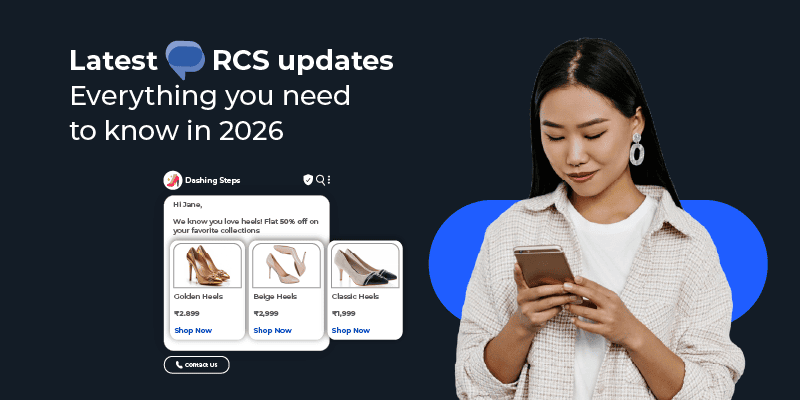
In Tier 1 India specifically, catalog works best when a customer has already entered a conversation via a CTWA ad, an inbound query, or an agent chat and needs to self-navigate a curated shortlist. Conversely, WhatsApp’s image carousels and video demos make it a fit for quick conversions, where customers can swipe through outfits and click to buy.
A festival carousel (Diwali collection, end-of-season, new drop) sent to a segmented opt-in list outperforms a static broadcast because each card has its own CTA and image. So the customer doesn’t have to navigate anywhere to express interest.
Carousel drives the initial sale. Catalog supports cross-selling and repeat browsing during or after the first conversation. The combination yields the highest LTV per WhatsApp-acquired customer in this vertical.
CRM and backend integration
WhatsApp commerce reaches its full potential when the chat interface is connected to a brand’s CRM, order management system, inventory platform, and payment infrastructure.
This is where the WhatsApp Business API, accessed through BSPs like Route Mobile, does the heavy lifting. Partnering with CleverTap, MoEngage, WebEngage, and Zoho means customer profiles, purchase history, lifecycle stage, and behavioral signals flow directly into the WhatsApp conversation layer, without a brand needing to build custom connectors from scratch.
Route Mobile operates as a recognized Meta Business Partner, enabling enterprise-grade integrations that go beyond message delivery into full commerce orchestration, including high-ticket deployments like Delhi Metro’s WhatsApp-based ticket booking, which required real-time seat inventory, UPI payment rails, and ticket issuance, all within a single chat thread.

Escalation criteria framework
A good WhatsApp support architecture in Tier-1 markets should:
- Automate 70% queries
- Escalate based on value, complexity, sentiment
- Deliver a human response within 60 seconds
Typical chatbot handover triggers:
- Bot fails 2 attempts
- Customer types “agent / human / support”
- Negative sentiment detection
- High-value customer identification
- Complaint / refund / fraud intent
First Response Time (FRT)
- Best practice → <60 seconds
Average Resolution Time (ART)
- <10 minutes
Indian enterprise benchmarks (WhatsApp Support)
| KPI | Benchmark |
| Automation rate | 70% |
| Agent handover rate | 20-30% |
| First response SLA | < 1 minute |
| Customer satisfaction | 85-92% |
| Chat resolution time | 5-10 min |
In mature WhatsApp deployments:
| Channel | Resolution Share |
| Automation / bot | 65-80% |
| Human agents | 20-35% |
Compliance and user consent
India has specific guidelines on WhatsApp message frequency to ensure a good user experience and compliance with Meta’s policies and emerging data laws. Meta enforces frequency capping on marketing template messages for Indian numbers, while transactional messages face fewer restrictions.
- Frequency capping
Meta’s frequency capping limits marketing messages (promotional templates) per Indian WhatsApp user across all businesses, typically around 2 per 24 hours, though exact dynamic limits are undisclosed and adjusted by Meta. Exceeding this results in delivery failures (e.g., error 131049), but utility, session, or Click-to-WhatsApp ad messages are exempt. Businesses should prioritize quality, segment audiences, and test timing, such as 2-5 PM, to improve engagement. - Compliance laws
India’s Digital Personal Data Protection (DPDP) Act 2023 requires explicit, specific consent (Section 6) for marketing messages, separate from transactional messages, as a legitimate use (Section 7). TRAI’s DND rules don’t yet directly apply to OTT apps like WhatsApp, but are expected soon via the Telecommunications Act 2023; opt-in and easy opt-out (e.g., “STOP”) are mandatory. WhatsApp Business Policy also demands pre-approved templates and quality ratings to avoid bans.
Source: (Meta, WhatsApp Business, DPDP)
Conclusion
Conversational commerce on WhatsApp is not an emerging experiment for Indian brands; it is rapidly becoming the default expectation for urban consumers.
What separates brands that succeed on WhatsApp from those that merely have a WhatsApp number is thoughtful conversation flows, genuine integration with backend systems, AI that knows when to step back for a human, and a commitment to earning and keeping customer trust through relevant, timely communication.
The brands that begin building their WhatsApp commerce capability today with the right conversational commerce platform, the right integrations, and the right content strategy will hold a significant structural advantage as this market matures.