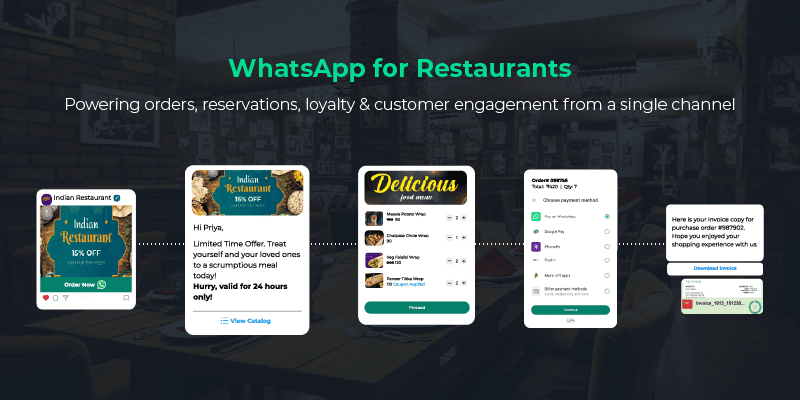
Business messaging through WhatsApp in Saudi Arabia has bloomed in the last few years. WhatsApp messaging is known to be leading this communication change. More and more businesses are adapting WhatsApp for their business interactions.
In 2025, WhatsApp is still the most popular messaging platform, where over 92% of internet users are actively on the app and more than 30 million active users nationwide.
Customers prefer WhatsApp messaging to interact with brands as it is a much more convenient and intimate way to communicate, and quite accessible too.
Just last year, Saudi Arabia users gained back the access to WhatsApp voice and video calling. For so many years, there has been a restriction due to the regulatory policies for VoIP services in the Kingdom. Earlier known as CITC, the Communication, Space & Technology Commission (CST) authorises and monitors this policy enforcement.
It was activated back out of nowhere. There was no official confirmation but users across Saudi Arabia noticed it. Users shared that the call quality was better and more stable.
If you were to believe experts, they say there was some major improvement in the telecommunication infrastructure and connectivity that activated back these unusable features.
Why do Saudi Arabia users prefer WhatsApp for reaching out to brands?
Well, if you look at Saudi Arabia users, their mode of communication preferences is mobile-first. For most things, such as shopping, banking and day-to-day services, they rely on their mobile phones. The large volume of user base for mobile apps from Saudi Arabia further shows how much they are habitual of their phones.
Now, among other messaging applications, WhatsApp wins the race by a far stretch. This is simply because WhatsApp is such a familiar, personal and intimate communication channel that they are already using it all the time.
So there is no friction when they decide to reach out to a business, WhatsApp makes most sense to them, in fact it comes quite natural. Not to mention, it is an app they already trust.
Users are showing a mobile-first approach and higher adoption of WhatsApp messaging
Saudi Arabia witnesses the highest adoption to smartphone use. The consumers are more likely to complete their customer journey on the phone, which starts from discovering the product to ending up purchasing it. It also continues the post-purchase customer journey involving support.
Business messaging is the larger part of the omnichannel communication ecosystem. Since it is faster and convenient than email, less formal than website forms, and also accessible without the customer needing to wait in a long queue time, it fits naturally into the omnipresent ecosystem.
Customers are more comfortable with sending a quick message on WhatsApp to interact with the brand rather than navigating through the complex service portals.
WhatsApp business messaging is more conversational, always has continuous context, personal and intimate. This only makes the communication improve response and engagement rate.
For businesses, this creates a strong case for adopting the WhatsApp Business API in Saudi Arabia as a primary communication channel rather than treating messaging as a secondary support option.
Customer is expecting more when it comes to how to interact with brands
Customer expectations in Saudi Arabia are evolving alongside broader digital transformation initiatives across industries.
Even though Saudi Arabia’s Vision 2030 doesn’t specifically talk about messaging platforms, it does emphasize on improving the digital services, better infrastructure, and optimising customer experiences.
This is why businesses are investing in the tools and infrastructure to ensure they have faster, more responsive and personalised communication.
Messaging platforms like WhatsApp help enterprises to meet these expectations as such platforms offer real-time responses, personalised interactions, transactional messaging and better engagement.
And if they leverage WhatsApp API integration, it further allows brands to scale their customer experience without making their operations complex.
Conversational communication is becoming more prevalent amongst customers
There is an inescapable delay in traditional communication channels. It happens a lot that emails go unread, or there is a long queue in the call centre. Sometimes, even the website form gets slow or laggy. WhatsApp messaging, since it is accessible and not restricted by these limitations, can remove these barriers.
Customers are free to just start a conversation conveniently, pause it and resume whenever they want without losing the context. Such an asynchronous style of communication connects more with today’s consumer behaviour.
Businesses, on the other hand, benefited from it as well. They can track the conversation, access the customer history, their queries, customer journey, everything. The support teams can respond much more efficiently. This type of engagement feels more personable, natural and connecting rather than just transactional.
Conversational commerce is a growing trend in business communication today, and it is only going to grow. And with that, WhatsApp is only going to be more and more popular, in fact, central for Saudi businesses to connect with their customers.
Seasonal and festive engagement with WhatsApp during Ramadan in Saudi Arabia
Several cultural and national events throughout the year create spikes in customer engagement in Saudi Arabia.
You will see customer engagement shoot up in Saudi Arabia particularly when there are some cultural and national events happening. Ramadan remains to this day, is the most commercial season for businesses. However, there are other festivals or events where brands see increased customer engagement. Such events are Eid al-Fitr, Hajj and Umrah, Eid al-Adha, Saudi National Day, and Founding Day.
All of these occasions bring high demand across various sectors such as retail, logistics, healthcare, and travel. You can imagine expenditure increasing for gifting, flowers, delivery, sweets, and so much more.
This is the time when WhatsApp helps these companies communicate directly with the customer, meeting them where they already are, on their most-used messaging app, i.e., WhatsApp, on their mobile devices.
Brands create WhatsApp campaigns to send out promotional messages, discount and offer alerts, booking confirmations, shipping details, and so much more, all in real-time.
But Ramadan particularly, is hands-down the most commercially successful event where the impact is so much that it has shaped users’ shopping behaviour, their buying patterns, and engagement across the nation.
In fact, it drives 35 to 40% higher transaction volumes due to the surge in demand for electronic, groceries, gifting, fashion, accessories, and other categories. Also, 77% of Saudi residents prefer online shopping, where more than 90% of e-commerce happens via their mobile devices.
This year, brands should also plan around the timing uncertainty. Ramadan can last 29 or 30 days. It all depends on the confirmation of official moon sightings across the Gulf region.
Due to this factor, businesses get less time to prepare for their campaign. So you need a flexible communication channel that works in real-time and has a higher chance of reaching out faster. And WhatsApp does it the best! Brands can quickly adapt to the schedule changes. If demand increases suddenly, it can help manage the communication better, along with addressing the customer queries.
We have witnessed how consumer activity is shifting more and more to mobile platforms, particularly after Iftar. It is the time when families sit to browse and shop online.
This is also great for religious travel, as more and more Saudi Arabian residents decide to go for Hajj and Umrah, so the associated services generate a high volume of queries there. They primarily use WhatsApp to book confirmations, share itinerary or package details, health guidance, and so many other use cases.
| Category | Insight |
|---|---|
| Social Purchases | 61% of KSA consumers shop via social channels |
| Quick Commerce | Orders increase by up to 70% during Ramadan |
| Social Commerce | Around 30% of online sales are influenced by WhatsApp & Instagram |
| Conversational Commerce | Chat and chatbot interactions drive around 25% of digital transactions |
Source: Arab News industry insights
How Saudi businesses can leverage WhatsApp Business API?
For businesses, to implement all these capabilities or applications, they need an official WhatsApp solution provider such as Route Mobile offering them WhatsApp Business API. Such a reputed service provider can help enable secure and seamless integration, establish required infrastructure, automation and enterprise-level communication management.
The standard WhatsApp Business app has its limitations and can work in a limited scope. But anything at scale, brands need proper integration, scalability, expertise, management and support. And for that, WhatsApp Business API is what you need.
It helps you build sophisticated and structured messaging campaigns which are personalised and strategically designed to meet the objective at enterprise scale. Businesses can use it to connect WhatsApp to their customer databases, CRM systems, automation and analytics tools.
1. Personalised customer support at scale
WhatsApp Business API allows brands to manage high-volume customer queries and interactions while keeping them highly personalised. This gives businesses a competitive advantage.
Then there are next-gen features such as CRM integration, intelligent routing, shared agent access and much more, giving you an advanced customer support management system.
2. Generating leads through conversational commerce
WhatsApp Business API helps businesses to fulfil customer journeys, taking the customer from their initial interest, nudging them towards the purchase. Through highly personalised and engaging conversations, it redirects potential customers to an email, forms or a human sales agent.
It utilises diverse customer touchpoints, including Click-to-WhatsApp ads to interact with them, where further down the line, sales teams can continue the customer lifecycle through product recommendation, updates, etc., fast-tracking their purchasing decision.
3. Increasing engagement through notifications and updates
The WhatsApp API solution can help businesses automate their transactional messages throughout their customer journey. These are essential to engage with customers, build trust, inform them about the product and much more.
After the purchase, brands send out order confirmation, shipping details, delivery updates, reminders, and notifications. Neither brands have to manually inform customers, nor do customers need to raise such common queries or go through a series of follow-ups.
4. Automating campaigns and managing the workflow
With WhatsApp Business API, businesses can automate sophisticated messaging campaigns at scale efficiently. This can handle everything ranging from day-to-day customer queries, sending transactional messages and qualifying leads. It can also route the conversation to the relevant agents and escalate when required. It requires minimal human intervention, and if strategically done, it can increase customer engagement without compromising user experience.
Most effective use cases of WhatsApp Business in Saudi Arabia
While WhatsApp is widely applicable, certain industries in Saudi Arabia are seeing a stronger impact due to local customer behavior and digital maturity. Below are the most relevant vertical applications.
WhatsApp business messaging is diversely applicable across industries. Still, there are some sectors in Saudi Arabia where WhatsApp dominates as the primary communication channel between brands and customers.
This is dictated by the customer behaviour and their digital maturity. Let’s look at some of these industries which witness maximum WhatsApp use cases.
1. Retail and eCommerce
The whole ecommerce sector, including the general retail and online shopping brands are dependent on faster and more responsive communication.
The target audience here is more tech-savvy, avid phone users and very familiar with online shopping trends. They frequently message brands for product availability, pricing clarification, and delivery timelines.
Since conversational commerce drives this sector very much, it’s no surprise why conversation-based modern messaging apps like WhatsApp lead the communication here.
Here are some common use cases:
- answering product queries in real time
- sharing catalog links
- sending promotional offers
- recovering abandoned carts
- post-purchase follow-ups
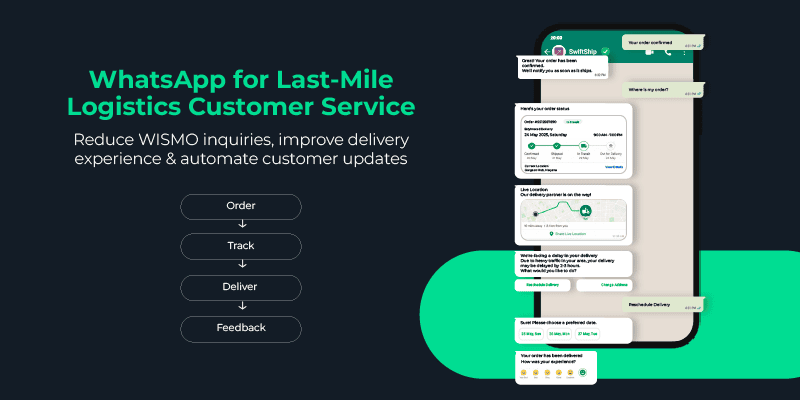
2. Logistics and delivery services
Logistics, transport and delivery services cannot function without real-time communication. WhatsApp messaging only makes most sense due to its high read, deliverability and engagement rates.
Brands can be sure that they have the most assured and fastest way to reach their customers as time is of the essence. There are so many less chances of failed deliveries. These companies use WhatsApp for:
- live tracking updates
- delivery confirmations
- rescheduling coordination
- location sharing
- proof-of-delivery confirmation
3. Hospitals, clinics, and pathology labs
The healthcare sector demands discreet and on-time communication with its patients. WhatsApp Business API offers automation, which helps reduce the administration workload, especially during high-demand periods. The hospitals and clinics can use WhatsApp for:
- appointment reminders
- follow-up instructions
- prescription notifications
- patient support queries
4. Banking, Fintech, and Telecom
The regulated industries, such as banking, fintech and telecom, warrants businesses to have a secure and compliant messaging channel for their business communication. They have to ensure user consent and data privacy. WhatsApp helps in this through:
- OTP and verification messaging
- account notifications
- service outage alerts
- billing reminders
5. Travel, hotels and hospitality
The hotels, hospitality and travel industry thrives on quick coordination and communication with their travellers and guests. Customers prefer an intimate and personalised communication channel, which should also be highly convenient and immediate. And needless to say, WhatsApp fits the bill perfectly! It allows brands to:
- booking confirmations
- itinerary updates
- concierge support
- special request handling
Understanding WhatsApp Business API costs in Saudi Arabia
Meta has defined a per-message billing model which decides the pricing for WhatsApp Business API services. Businesses have to pay on the basis of conversation categories such as marketing, authentication, service, etc., within a 24-hour messaging window.
You will find Saudi Arabia under the Category 2 (MENA) pricing structure shared by Meta. Recently, there have been some updates with the goal in mind to improve the cost efficiency of using WhatsApp messaging at scale.
On October 1st, 2024, the market conversion rates for Saudi Arabia were updated. Then, the authentication conversation cost was reduced on 1st February, 2025. In the very same year, there were further reductions, particularly in authentication and utility message rates in October month.
Industries such as banking and telecom benefited from these pricing changes, as these are businesses that primarily deal with authentication and transactional messages. It helped them lower costs while improving ROI, while continuing to deliver compliant, high‑volume customer communications.
The overall cost of the campaign varies as it is based on the type of message, your campaign strategy and other various factors.
How can you optimize cost for Saudi campaigns?
Well, the cost of messaging within a campaign increases when brands do not optimize it.
When you send a high-volume marketing broadcast without any personalisation and segmentation, it often increases the cost. Another reason could be brands using lengthy and unnecessary follow-up messages or using a template too many times. Also, brands must ensure that their campaigns are properly targeted to reduce campaign cost.
When a campaign doesn’t bring engagement, remember that it is increasing your expenditure for sure, as there is no substantial ROI. Businesses leverage various strategies to manage the cost, such as:
- using transactional messages where required
- strategically segmenting audiences
- timing campaigns around peak hours
- Using both automation and human escalation, but only when needed
It becomes important for brands to choose an experienced and reputable WhatsApp Business API provider in Saudi Arabia to help them optimize routing, template approvals, and campaign performance.
What are the compliance and local requirements for WhatsApp Business in Saudi Arabia?
Businesses in Saudi Arabia need to have a balance between convenience and compliance. The customer communication in this nation warrants a certain level of privacy and regulatory management. This is why it becomes essential to structure your WhatsApp business messaging strategy.
Businesses in Saudi Arabia need to make sure they meet the regulator compliance, data privacy regulations and other business communication protocols. You need to work within the set expectations of law, regulation and compliance management of the country. So, for that, you need to design, manage and optimize your messaging accordingly.
1. Getting consent through opt-in methods from customers
WhatsApp Business API follows the strict opt-in model where businesses need to get explicit consent from customers to receive the messages from the said brand.
Businesses must follow opt-in protocol and use various methods like sign-up forms, app-based permissions, etc., to get the consent from customers.
2. Considering the Saudi data privacy, governance and compliance
The Personal Data Protection Law (PDPL) of Saudi Arabia has a certain set of rules and regulations on how businesses should collect, process or store personal data of customers when they interact.
The Saudi Data and Artificial Intelligence Authority (SDAIA) oversees and ensures that these regulations must be followed. Make sure you consider cross-border data processing, alignment with PDL requirements regarding international data transfer, proper handling of customer data and consent management.
The organisations must need to ensure:
- Customer data is collected for legitimate purposes
- Access controls are defined internally
- Message data is handled securely within integrated systems
- Retention practices align with company policies
3. Leveraging the best messaging practices
Businesses must maintain the operational discipline to prevent compliance issues and customer fatigue. It’s integral that companies follow these principles as it will help them improve deliverability as well as protect their brand reputation.
Brands need to keep their messages to follow the compliance guidelines and optimize for regulation clearance. For that, it is essential that you maintain operational hygiene to prevent potential issues such as over-promotion, customer fatigue, etc. The idea is to follow some protocols that can improve your message deliverability and maintain your reputation as well.
Here are some practices brands must follow:
- providing clear opt-out instructions
- limiting message frequency
- sending contextually relevant updates only
- avoiding unsolicited promotional messaging
How to get the WhatsApp Business API in Saudi Arabia
To set up WhatsApp Business API in Saudi Arabia, you need preparation and coordination between Meta approval processes and a certified solution provider. This process is quite structured and simple to follow if brands are correctly steered through this.
You need a business service provider to help you integrate WhatsApp Business API into your business messaging strategy.
You will need a verified Meta Business Manager account, a dedicated phone number which is not linked to your personal WhatsApp profile, and some business verification documents. Also, you must strategise where you are going to use WhatsApp, for what application or use case.
Choosing the right WhatsApp Business API provider
Make sure you spend a significant amount of time on researching for the best WhatsApp Business API provider. This decision will dictate your business communication strategy and overall growth in the coming years.
You must analyse the provider who has experience operating in Saudi Arabia, where they understand the local market, have a reputation and can make your onboarding simple.
Businesses should evaluate providers based on:
- onboarding guidance and technical support
- How much they are good with the Arabic language and cultural aspect
- integration flexibility with CRM or support tools
- Is it scalable for increasing volumes of conversations
- Awareness about the local compliance and regional experience
The best business service providers, such as Route Mobile, will make your onboarding simpler and faster. They have required technical infrastructure, expertise, integration workflow and strategy to help you see through this transformation end-to-end.
How to get faster approval for templates?
The organisation must have approved message templates when they are initiating conversations with potential customers. The process requires the templates to be reviewed by Meta before they get activated.
Here’s how you can make sure you get approval faster:
- Make sure the message intent is clear, simple and specific
- Better to avoid the promotional or salesy language in utility templates
- Use natural customer-facing verbatim
- Having the Arabic versions ready in parallel with English, where required
What are the best practices for making your messaging localised and culturally appropriate?
The language and cultural context strongly influence how customers respond to business messaging in Saudi Arabia.
You cannot separate language from its culture. So, just translating into Arabic, you can’t connect with the local public. To address them, connect with them on a personalized level, you must understand the cultural context.
You can’t just simply translate English templates into Arabic, which either won’t work or won’t be effective. Your messages should feel natural, conversational and culturally-appropriate.
Businesses using the WhatsApp Business API in Saudi Arabia should treat localisation as part of customer experience design, not just language conversion.
1. Making your Arabic message feel natural
When translating, many nuances get lost in the way. More than that, it can sound too robotic or too formal, disconnecting the target audience from the brand. Afterall, when you utilize conversation communication, the idea is to make it feel like a conversation. Then only, they will respond.
So, when you design an Arabic message template, you make sure:
- The sentence structures you use must be simple and easy
- avoid literal word-for-word translation
- Keep the tone overall polite and respectful
- clearly explain the purpose of the message
Testing templates with native speakers before submission can reduce approval delays and improve engagement rates.
2. Addressing the bilingual customers
In Saudi Arabia, there are both Arabic and English-speaking people. Businesses, when designing their customer experience, must address this. Your messaging strategies, options you give them, everything needs to help to make the support bilingual communication smooth.
Here are some best practices:
- allowing customers to choose their preferred language early
- Using consistent terminology across languages
- routing conversations to relevant agents when required
- ensuring automated responses match the user’s language
3. Meeting the cultural expectations of the region and customising the messaging
Customer expectations extend beyond language. Tone, timing, and responsiveness influence trust. Localised messaging helps conversations feel authentic rather than automated.
To connect with the customer, it is not all about language. There is a cultural nuance in how a specific community, region, or country interacts or understands each other. Your messaging needs to tap into this cultural aspect so it is more personal, connecting and relatable.
So, the tone you choose, timing for messaging and other factors are essential to make the conversation more personable and authentic.
Here’s what you must consider when crafting the message:
- Must have respectful greetings and closing phrases
- Responding at the right time, especially during evenings
- avoiding sending too many promotional messages
- With professionalism, your message must sound friendly and warm
How to leverage WhatsApp Business API in Saudi Arabia for omnichannel communication?
WhatsApp Business API integration needs to be strategically integrated into your holistic omnichannel communication ecosystem.
It will help brands to maximise their ROI and benefits through a long-form customer engagement strategy where the focus is on building a cohesive cross-platform approach rather than just one.
1. Designing the customer journey from discovery to conversion
You need to lay out the customer journey from discovering your brand, the early acquisition, to the conversion and further to the post-purchase support.
For maximum ROI, make sure you integrate WhatsApp messaging with the customer acquisition and communication channels your brand already uses to design an omnichannel communication strategy.
Due to this, customers can expect an omnichannel seamless user experience where, irrespective of which touchpoint they choose to interact with the business, they can continue their conversation without losing context.
So they don’t have to share the same details again and again. Here’s how this customer journey will be:
- Click-to-WhatsApp ads driving initial contact
- automated greetings and qualification flows
- product or service assistance through chat
- human agent support for decision stages
- transactional updates after conversion
2. Measuring success and optimising performance
The specific metrics help businesses evaluate how effective the messages they are sending to improve their campaigns over time. When you continuously optimize, it makes sure that your messaging always remains relevant and cost-efficient as your usage grows.
These are metrics you need to monitor and optimise your campaign with:
- number of conversations initiated
- response time
- lead qualification rates
- conversion outcomes
- customer satisfaction signals
Conclusion
Conversational commerce has become what drives larger industries in Saudi Arabia when it comes to customer communication.
Since most users prefer to receive personalized and convenient messaging channels as WhatsApp, WhatsApp Business API is an integral part of business communication for brands.
Customers want to interact with the brands through WhatsApp, whether to ask product queries or for post-purchase support.
The increasing customer expectations regarding how brands communicate to them warrant businesses to step up and leverage business service providers’ expertise on WhatsApp Business API integration to upgrade their customer engagement and communication capabilities at scale.
The WhatsApp Business API in Saudi Arabia helps organisations to scale such personalised conversations with the required compliance and country specific regulation.
We at Route Mobile help organisations leverage WhatsApp Business API through seamless integration to achieve their business communication goals. Contact our experts today to get started.