Customer conversations have changed faster in the last five years than in the previous twenty.
They are found mostly on social media platforms, and messaging is already embedded in the day-to-day digital behavior.
In fact, 97.3% of connected adults use at least one social media or messaging platform each month.
They expect instant replies, conversational guidance, and actions that can be completed directly within the messaging apps they already use daily.
This shift is exactly why the WhatsApp chatbot has moved from a “nice-to-have automation” to a core business communication layer.
Messaging channels are now where discovery, support, transactions, and engagement happen simultaneously. Businesses aren’t just sending notifications anymore but running entire customer journeys within the chat.
Among all channels, WhatsApp and RCS stand out as both combine reach with interactivity. It allows companies to move beyond static messages into real conversations powered by automation and AI.
WhatsApp brings unmatched global adoption and familiarity. RCS introduces richer native messaging experiences with interactive elements built directly into carrier messaging apps.
Together, they create a powerful foundation for conversational automation at scale.
This is where unified platforms like Route Mobile’s Roubot come into play, enabling businesses to design, deploy, and manage chatbot experiences across modern messaging channels without building separate systems for each one.
Understanding chatbot interactions
The chatbot is an automated computer program designed to stimulate human-like communication. It is capable of interacting with a conversational interface using text, audio, or a combination of both.
Fundamentally, it is an automated conversation agent that functions as a virtual assistant that interacts with customers in the digital communication channels where they already use, such as WhatsApp, RCS messaging, etc.
How do chatbots work?
So, here’s how the interaction flow of an RCS or WhatsApp AI chatbot works:
- Triggers: The conversation starts when a user sends a message through text or voice. There are also specific keywords that can also trigger the interaction, or they can choose options from the given menu or button-based interface.
- The flow: Once input is received, the chatbot leverages technologies like NLP (Natural Language Processing) to parse grammar, correct spelling, and identify intent and entities. The bot follows the solution flow, which is a sequence of steps/questions designed to gather essential information to resolve the user’s problem.
- Responses: The chatbot searches the database for pre-programmed or generated responses to match the user’s intent.
Rule-based chatbots vs AI-powered chatbots explained.
Here’s a comparison between rule-based and AI chatbots:
| Feature | Rule-Based Chatbots | AI-Powered Chatbots |
| Logic | Use “if-this-then-that” logic and fixed scripts. | Use Machine Learning (ML) and NLP to understand intent and context. |
| Interaction | Rely on buttons, menus, and specific keywords; often called “click-bots”. | Allow for free-form, natural language conversations that feel human-like. |
| Learning | Do not learn from interactions; they require manual updates to change. | Continuously learn and improve their responses over time based on user data. |
| Best For | Simple, predictable tasks like tracking an order or answering basic FAQs. | Complex, personalized interactions such as financial advice or troubleshooting. |
| Complexity | If a query falls outside the pre-defined rules, the bot often fails to respond accurately. | Can handle “out of left field” questions and recognize advanced conversation scenarios |
Combining chatbots with next-gen channels
WhatsApp has a massive global user adoption, with over 3 billion monthly active users around the world, making it one of the most widely used messaging platforms.
It is the go-to messaging platform in countries like India, Brazil, and Mexico. In the U.S, WhatsApp has the fastest-growing market.
For businesses, this presence offers a fast, personal, and secure environment to scale meaningful conversations throughout the entire customer journey.
The WhatsApp Business API creates an essential foundation for scalable automation. It allows medium to large enterprises to go beyond the manual limitations of the standard business app.
How do WhatsApp chatbots work?
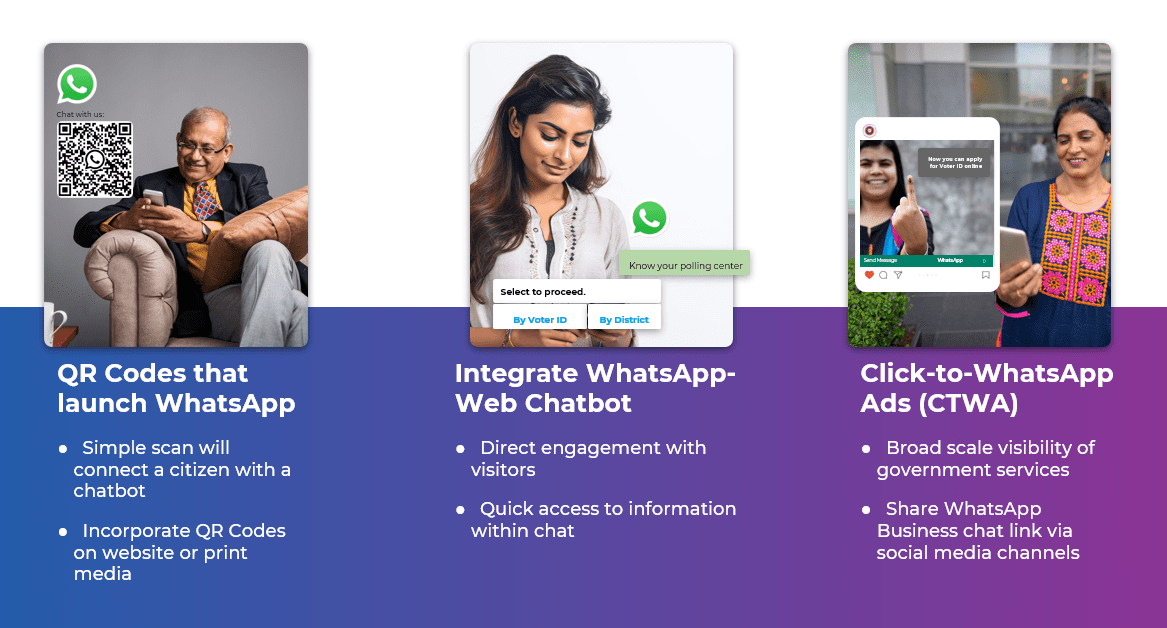
- Messaging channel entry point: The interactions start when a user clicks a ‘Click-to-WhatsApp’ ad, scans a QR code, or follows a wa.me link on a website or social media page.
- Bot engine and workflow logic: The engine leverages NLP (Natural Language Processing) and ML (Machine Learning), which runs the bot’s ability to identify user intent and extract entities.
- Backend integrations: Chatbots integrate with backend systems such as CRMs, payment gateways, and logistics trackers to facilitate real-time updates and complete transactions.
- Conversation lifecycle: Customer interactions follow a structured path starting with a welcome greeting, followed by a menu or list message. The process guides users towards specific actions like order processing or appointment booking.
- Seamless escalation to live agents: When the chatbot receives a query that exceeds its capability or the user specifically requests a human agent, the system triggers escalation to a live agent.
RCS
RCS stands for rich communication services. It is a modern communication protocol designed to upgrade the traditional SMS experience.
It offers rich media, context-aware messaging, and interactive features in the native messaging app, where users do not need to download any third-party applications.
This results in higher engagement and stronger brand interaction. The business gets features like typing indicators, read receipts, and verified business profiles.
RCS witnesses growing carrier adoption and a massive surge in device support, specifically after Apple’s recent integration in iOS 18, tapping into a channel with an additional 1.5 billion potential new users.
How do RCS chatbots work?
- Native messaging channel integration: RCS is integrated into the mobile device’s native messaging app, where there is no need to download a third-party app or register for it.
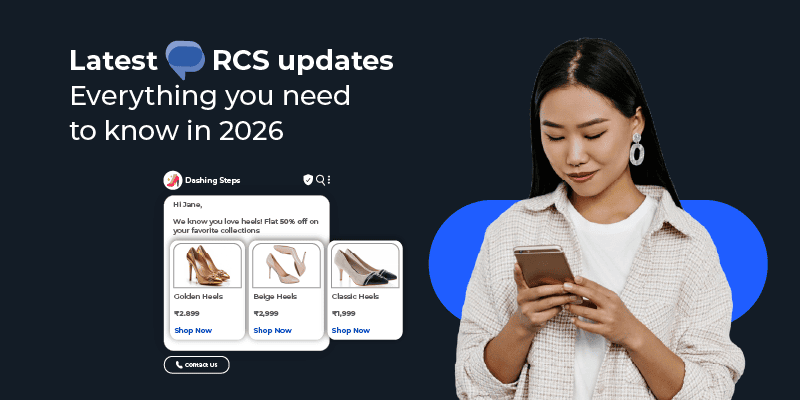
- Rich cards, suggested replies, and carousels: Unlike the text-only constraints of SMS, RCS chatbots leverage highly advanced features such as rich cards, carousels, interactive actions, and more. They trump SMS capability as they are highly effective in showcasing products and interactive experiences to steer the conversation.
- Backend system connectivity: RCS bots can be integrated with backend databases to build unique customer profiles. This enables them to share personalized offers that users can redeem in-channel with a single button press.
- Structured conversation flows: The RCS bots are designed based on strategic design principles that clearly reflect the set purpose. It also ensures that every command is actionable, making it easy and direct for users to get a solution to their said problem.
How to design effective chatbot conversations?
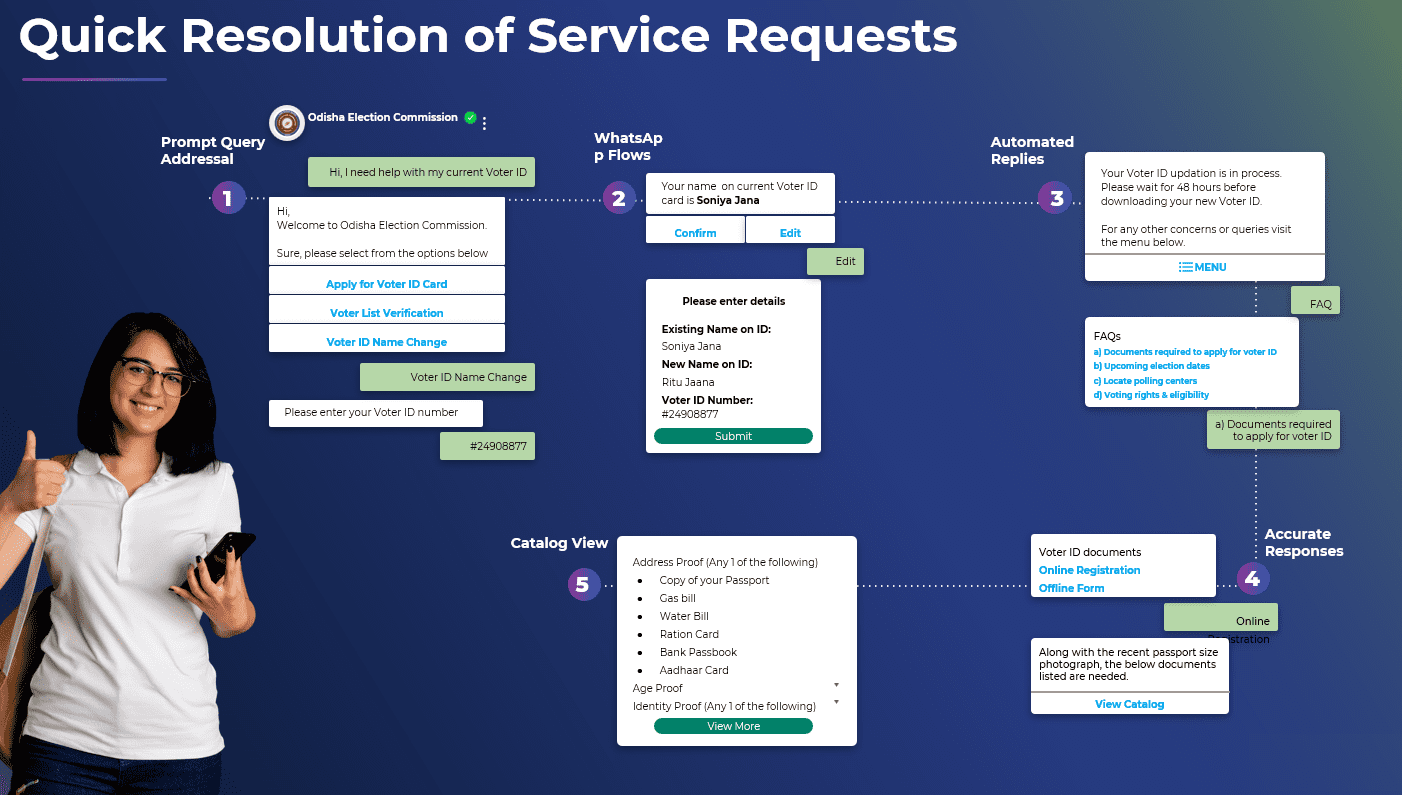
When you set out to design an effective chatbot conversation, the challenge is more on the conversational side of it, rather than the technical aspect.
The idea is to focus on how brands interact with customers and build the interface for maximum impact.
Fundamentally, you would want to have the most direct line between the user’s problem and the right solution.
What are the best practices for conversation design?
Here are some best practises for better conversational design for your WhatsApp chatbot for business:
- Keep it short, clear, and precise: To begin with, you should not bombard users with a large block of text. The best you can do is break down the information in short chunks or summarize the data using a button to ‘view details’.
- Setting up the clarity of intent and prompts: Users often assume chatbot can help them with any request. So, make sure you set expectations upfront, clarifying what exactly the chatbot is designed to do.
- Avoid your temptation to build a ‘Swiss Army Knife’: When you make a bot that tries to do everything, it tends to confuse itself as well as the user. The most effective strategy for optimum results is to stick to a single, well-defined function or a limited set of actions.
- Simple choices vs open text: It is about favoring the structured option buttons and quick replies over open text to minimize user friction and speed up the journey.
- Fallbacks & clarity in errors: Since chatbots have functional limitations, it becomes critical that you always provide a human fallback option, such as a ‘contact support’ action button, to resolve complex queries.
Persona and tone for WhatsApp and RCS chatbot interactions
WhatsApp and RCS bring conversation into a personal space for users where they interact with friends and family.
Due to this, how you utilize brand voice and tone makes all the difference. Here’s what you can do to optimize your brand voice, tone, and persona for impactful interactions.
- Reflect the brand across communication channels: Decide how you will interact with users. Set your brand voice, whether it will be formal or humorous. Then, make sure it is consistent across all messages.
- Remembering the context: Conversations must feel natural and authentic. For that, the bot needs to remember the context so the user does not have to share the same detail multiple times.
- Personalize the messaging: Leveraging existing customer data and previous conversations, you must tailor interactions and recommendations based on their history.
Use cases of chatbot across WhatsApp and RCS
Chatbots across WhatsApp and RCS support a wide range of use cases, helping businesses automate conversations across marketing, sales, and customer support.
WhatsApp enables scalable, conversational engagement, while RCS adds a more interactive, app-like experience within the native messaging environment.
Chatbot use cases on WhatsApp
1. Customer support
Chatbots serve an indispensable role in customer support, particularly by being available 24/7 as an initial support line, relieving human agents of repetitive, high-volume, and standard queries.
- Answering the FAQs: You can use both rule-based and AI-powered systems to provide instant answers to commonly asked questions, such as about pricing, opening hours, product details, availability, etc.
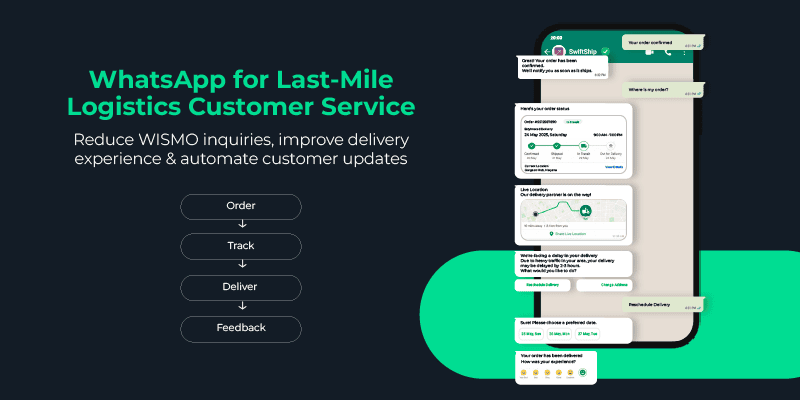
- Tracking order status: Tracking the real-time status of an order, shipment, or logistics is a major example of how prominently chatbots are used in customer support.
- Raising a ticket and registering a complaint: Chatbots are quite effective in automating ticketing and complaint registration processes. For example, ecommerce brands allow their customers to check the real-time delivery status of their orders.
- Escalating to a human agent: Chatbots are very capable of recognizing when queries become too complex or scenarios where customers prefer or even demand human interaction. They seamlessly transition the conversation to a live agent, preserving the context so the user does not have to repeat themselves.
On RCS, customer support interactions can be enhanced with rich cards, quick reply buttons, and visual workflows, allowing users to navigate support options more intuitively within the native messaging interface.
2. Sales & lead qualification
Chatbots across WhatsApp and RCS can act as digital sales assistants, helping businesses guide users from initial interest to conversion within the messaging interface.
While WhatsApp enables conversational engagement at scale, RCS enhances this experience with visually rich product discovery using carousels, suggested replies, and interactive cards.
- Pre-sales conversations: Bots can help in the research phase of a potential buyer or lead, especially for a high-value item like insurance, a car, or a house. It can answer all the detailed questions customers can possibly think of. It provides them with personalized help without burdening them with a quick response.
- Product-related information: Chatbots are used, especially in WhatsApp and RCS, through visual interactive messaging about anything and everything about the product through catalogues, brochures, offers, etc., and that too natively within the chat window in the user’s mobile device.
- Lead generation, qualification, and processing: When trained well, bots can help screen, identify, qualify, and process leads based on budget, timeline, location, etc. It streamlines the lead to a sales representative once qualified.
3. Marketing and campaigns
When you leverage chatbots on platforms like WhatsApp and RCS messaging, you promise a high open rate, making it a powerful choice for personalized marketing.
RCS further strengthens campaign engagement by enabling branded, media-rich messages with interactive elements that drive higher user interaction directly within the messaging app.
Here are some examples of how it is used in marketing and promotions:
- Brand and product promotions: Businesses utilize rich media capabilities like carousels to launch new offerings with a much more personalized approach.
- Engagement flows: You can leverage automated triggers, which are used to send abandoned cart reminders. This also includes using a small case incentive to nudge the potential customer towards making the purchase.
- Event RSVP: Businesses use chatbots to send invitations for product launches and webinars. Also, it allows recipients to RSVP directly within the application.
4. Transactional workflows
The advanced integration allows chatbots to go beyond conversations towards actual call-to-action tasks. Here’s how a chatbot helps in transactional workflows:
- Order and booking: Through chatbot, users can book a doctor’s appointment, restaurant tables, or movie tickets. There are structured decision trees or natural language used to make it seamless for users.
- Payments: Chatbots can issue invoices and enable one-click payments natively in-app. It allows customers to choose sizes, add items to the cart, and pay without switching apps.
With RCS, these transactional journeys can be made more interactive through guided flows, allowing users to complete actions such as bookings or payments using structured prompts and visual interfaces.
5. Survey & feedback collection
Brands use a conversational approach to gather feedback from customers because a chat feels more personal than traditional web forms. It has a higher chance of getting more responses.
- NPS surveys: NPS stands for Net Promoter Score. These surveys can be triggered right away after support interaction or purchase to record real-time customer satisfaction.
- Interactive quizzes: Brands use quizzes and survey polls to collect audience insights and preference data, along with making engagement light and fun.
RCS enhances feedback collection by enabling interactive survey formats with quick reply options and visual elements, making it easier for users to respond without friction.
Chatbot use cases on RCS
RCS enables more visually rich and interactive chatbot experiences within the native messaging app, making it well-suited for guided, multi-step customer journeys.
- Rich media interaction: RCS chatbots use high-resolution images, carousels, and dynamic content to create visually engaging experiences
- Guided user journeys: Suggested replies and action chips help users move through decisions without needing to type.
- In-channel actions: Users can complete actions such as redeeming offers or accessing services directly within the conversation
What to consider for technical implementation?
Here’s what you should consider for technical implementation for seamless WhatsApp and RCS chatbot integration:
WhatsApp and RCS: Templates, sessions, message types, and rich features
Even though both communication channels support rich media such as images, videos, and carousels, the technical frameworks are different here.
While both channels enable conversational automation, WhatsApp follows a more structured, template-driven approach, whereas RCS offers greater flexibility with native messaging capabilities and interactive formats.
1. Message templates and approvals
WhatsApp needs the use of pre-approved templates for business-initiated conversations. These templates need to follow strict guidelines and commerce policies, and must be categorized properly.
In contrast, RCS does not rely on pre-approved templates in the same way, but instead focuses on verified sender identities and branded messaging experiences.
2. Session-based communication
WhatsApp works on a 24-hour conversation window. RCS does not follow a fixed session window model, allowing more flexibility in how and when businesses engage users.
A session starts when a message is delivered or when the business replies to a user query. This is when businesses pay a single fee for all messages exchanged within that 24-hour window.
3. Rich features and character limits
RCS is natively integrated into mobile devices. It supports up to 250,000 characters per message. With SMS, you get only 160-characters limitation.
WhatsApp offers “WhatsApp Flows” used for structured, form-based data collection, whereas RCS uses “action chips” and “suggested replies” to steer the conversation through predefined outcomes.
You will get scrollable image carousels on both of the platforms. However, WhatsApp buttons are often limited to three per message.
Integration with CRM, ticketing, and inventory systems
The chatbot’s value is maximized when it functions as an extension of your existing business infrastructure rather than a standalone tool.
- CRM systems: Integrating with a CRM allows the bot to capture leads 24/7 and store customer preferences. This connectivity enables hyper-personalization, allowing the bot to greet users by name or suggest products based on their past purchase history.
- Inventory and search APIs: For e-commerce, bots can query search-as-a-service providers like Algolia to display real-time product availability and pricing through the chat interface. This allows users to browse live catalogues and even receive reorder reminders based on inventory status.
- Ticketing and support: Bots can automate the initial support line by answering FAQs or creating tickets for damaged goods using customer-uploaded photos or videos. Complex issues are then routed to human agents with the full conversation history attached.
Multi-channel routing and context syncing
For enterprises operating across various platforms, maintaining a consistent user experience requires advanced routing logic.
- Unified bot engines: The technical implementation often involves using a single bot engine that can be deployed across WhatsApp, RCS, Slack, and Facebook Messenger simultaneously. This ensures that your business logic remains centralized, while the interface adapts to platform-specific UI elements, such as WhatsApp list messages or RCS suggested actions.
- Context syncing: It is important to remember the conversational context so users do not have to repeat information. This accounts for storing session data. When you sync context across channels, users can start with an inquiry on the website or update on WhatsApp without losing their progress.
What are the KPIs and success metrics for chatbots?
1. Engagement rates
Next-generation messaging channels, such as WhatsApp and RCS, deliver significantly higher engagement compared to traditional communication methods.
WhatsApp messages witness an average open rate of 98% with strong click-through performance, while RCS enhances engagement through interactive elements such as suggested replies, carousels, and branded messaging experiences.
RCS also provides deeper engagement signals, including read receipts, button clicks, and interaction tracking, giving businesses better visibility into user behavior.
Effective communication drives high reply rates by sending rich-media, informative guides when prospects ask.
Unlike human agents, chatbots can handle thousands of conversations simultaneously, scaling engagement without rising costs.
2. Completion rates through the bot flow
It becomes critical to track how users navigate through a “solution flow” to identify technical and design friction.
- Self-service completion: It is one of the primary metrics showing the rate of successful self-service completion, where a user finishes a task without human intervention or involvement.
- First Contact Resolution (FCR): This measures the percentage of queries fully resolved in the first interaction; transactional bots handle complex cases better than basic ones, yielding higher business value.
- Drop-off analysis: It is essential to identify where users leave the conversation. It helps developers refine their logic and reduce “none” intents, which indicate a bot is failing to understand the user.
On RCS, structured flows with guided responses and visual prompts help improve completion rates by reducing user friction and making navigation more intuitive.
3. Time to resolution and support deflection
The chatbots are highly effective at freeing human agents from repetitive and high-volume tasks:
- Support deflection: The advanced implementations can deflect a huge percentage of customer inquiries.
- Faster resolution: Bots can provide significantly faster resolution to customer queries and reduce the average agent managing time dramatically.
- Instant support: Ideally, a bot must respond within a second or two, dramatically reducing the turnaround time (TAT) compared to human-operated queues.
RCS further supports faster resolution by enabling contextual, interactive responses that guide users through solutions without requiring repeated inputs.
4. Conversion rates driven by chatbot funnels
Chatbots can help as a digital sales assistant that drives measurable ROI through targeted funnels:
- Lead qualifications: The bots automatically screen prospects, such as asking about budget or timeline, and route ‘hot’ leads to sales representatives right away.
- Acquisition costs: Chatbots for sales can help dramatically lower customer acquisition costs and lead to substantial growth in the active customer base.
- Conversion growth: When appointments are booked via WhatsApp, it results in a higher conversion rate. You can also see a significant boost in overall lead generation.
With RCS, conversion journeys can be enhanced through visually rich product displays and actionable prompts, helping users move from discovery to transaction within a single conversational flow.
What are some common challenges, and how to solve them?
Here are some major challenges and how you can resolve them:
Challenge #1: Template approval delays on WhatsApp
WhatsApp needs pre-approved message templates for business-initiated conversation which often go through delays.
As a solution, you need to leverage a test sandbox environment provided by your chatbot company to start development while waiting for API access.
This allows you to build and test the bot with your own phone number, so it’s ready to launch the moment Meta allows approval.
Even though Meta usually approves templates immediately, it may take up to 24 hours in rare cases.
Challenge #2: Natural language understanding (NLU) limits
Even though there are advanced AI chatbots, they have their limitations in understanding the nuances of human speech. This often leads to incorrect responses or “none” intents.
The solution here is to implement a confidence threshold to make sure the bot only responds when there is reasonable certainty of the user’s intent.
If the score is below this threshold, the chatbot must trigger a graceful error message asking the user to rephrase.
Apart from this, the experts suggest training the bot with at least 50 variations for each intent to help it cross the “uncanny valley” of machine interaction.
Challenge #3: Overcomplex bots leading to poor user experience
One of the most common mistakes is trying to build a “Swiss Army Knife” chatbot that attempts to do everything, which often confuses the user and the system.
The solution to this problem is sticking to a single, well-defined, and specific function or a limited set of actions, ideally 3 or less than that.
To minimize friction, use horizontally scrollable quick replies and buttons instead of forcing users to type long responses.
If an interaction requires too much information, the chatbot should switch to a web form to collect data more efficiently.
Challenge #4: Fallback to human agents
The chatbots are not perfect and will eventually encounter a query they cannot handle, which can lead to user frustration.
Businesses should always include a human fallback option, such as a “Contact Support” action chip or button, to save the chatbot from “embarrassment”.
The advanced bots can utilize sentiment analysis to detect frustration or negative language and automatically trigger a human handover.
This preserves conversation context, ensuring the user does not have to repeat themselves to the live agent.
Challenge #5: Language localization and multi-lingual bots
To serve a global audience, chatbots must handle multiple languages without losing the context or accuracy of the interaction.
The platforms like Route Mobile’s Roubot support 75+ languages, enabling businesses to deliver consistent, localized experiences across diverse customer bases.
Enterprise-grade AI chatbots can automatically detect a user’s locale based on their initial input or source data and switch languages accordingly.
The platforms like Route Mobile allow businesses to serve customers in 90+ languages and can use AI to instantly fix broken translations, avoiding “Sorry, I don’t understand” moments.
Roubot: Route Mobile’s Unified Chatbot Platform
Roubot is Route Mobile’s unified RCS and WhatsApp chatbot builder platform designed to increase conversions and engage customers through smart automation across the entire customer journey.
How does Roubot support both WhatsApp and RCS?
Roubot is actively deployed across industries to power high-volume, real-time conversational journeys on WhatsApp and RCS.
These implementations move beyond basic automation to enable end-to-end customer interactions within messaging channels.
One example of such impactful deployments is Route Mobile’s collaboration with Shohoz in Bangladesh, where chatbots across WhatsApp and RCS enable users to search routes, check availability, and book bus tickets directly within chat.
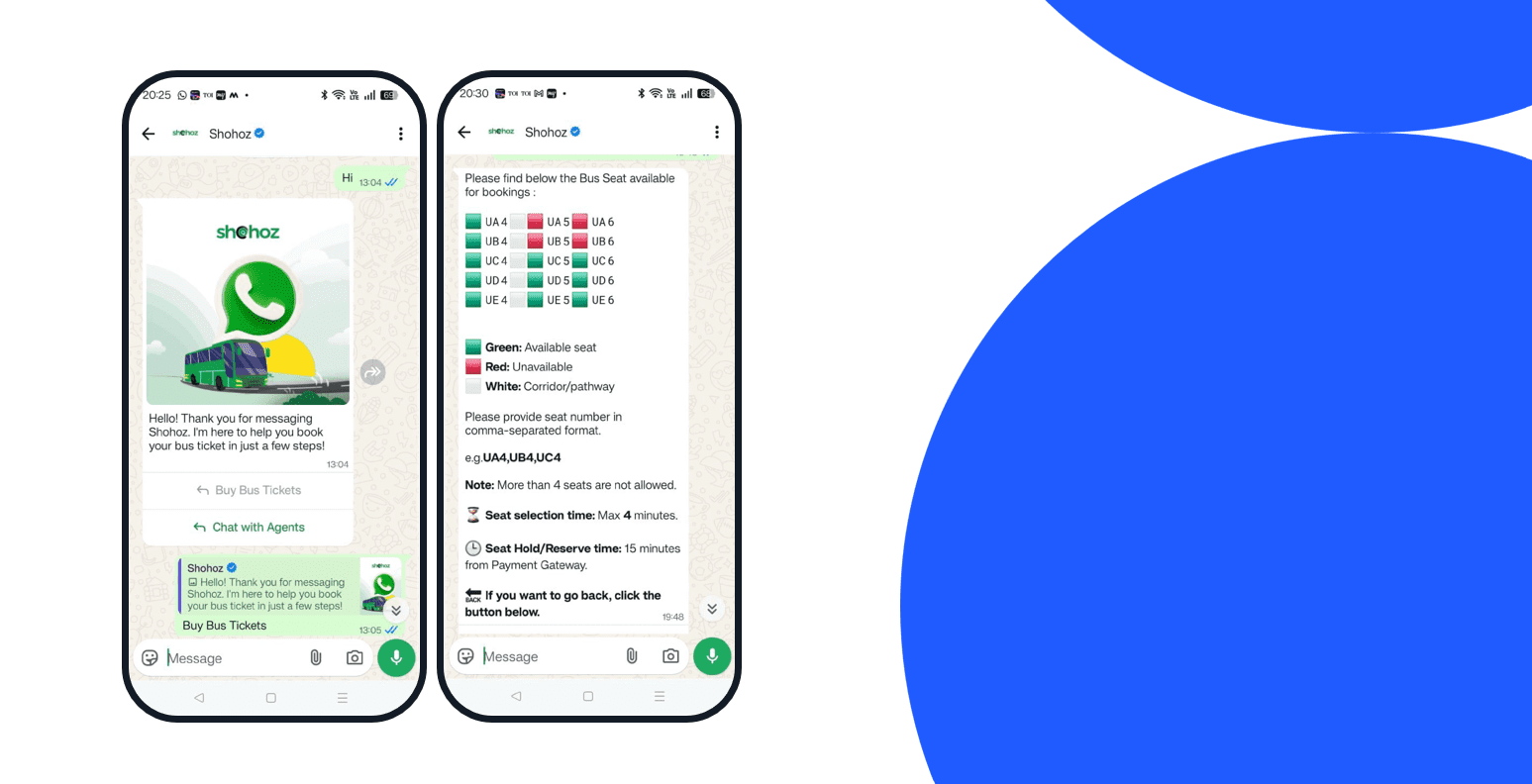
The platform supports a large-scale ecosystem with over 10 million users, 1,000+ transport partners, and 3,000+ routes, demonstrating how conversational interfaces can simplify complex, transactional workflows.
In the banking sector, deployments such as Bank of Maharashtra showcase how chatbots can handle customer servicing at scale.
These implementations support use cases such as balance inquiries, service requests, and customer support, reducing reliance on traditional call centers while improving response times and accessibility.
Across industries, Roubot-powered solutions are used for:
- Conversational commerce and bookings
- Automated customer support and ticketing
- Lead qualification and onboarding journeys
- Notifications and transactional messaging with interactive flows
Roubot is built to support enterprise-grade messaging requirements, enabling businesses to manage high-volume conversations across channels while maintaining consistent response quality and low-latency interactions.
Real-world case studies powered by Roubot
Roubot is actively deployed across industries to power large-scale conversational journeys on WhatsApp Business Platform and RCS Business Messaging.
These implementations demonstrate how businesses move beyond notifications to fully interactive, transactional experiences within chat.
Case Study 1: Shohoz – WhatsApp-based ticket booking at scale
Route Mobile enabled Bangladesh’s first WhatsApp-based bus ticket booking solution in partnership with Shohoz, a leading digital ticketing platform.
Built on WhatsApp Business Platform and powered by Roubot, the solution allows users to search routes, check seat availability, and complete bookings directly within a chat interface, eliminating the need to switch between apps or websites.
The scale of this deployment highlights the strength of conversational commerce, with the platform supporting over 10 million users, more than 1,000 travel partners, and access to 3,000+ routes.
Chatbot brings a multi-step transactional journey into a single conversation flow, where it simplifies the booking experience while maintaining speed and convenience for users.
Case study 2: Bank of Maharashtra – Conversational banking on WhatsApp
Route Mobile partnered with Bank of Maharashtra to implement a WhatsApp-based chatbot. It digitizes customer interactions and improves accessibility to banking services.
Through this deployment, customers can access essential services such as balance inquiries, ATM location details, mini-statements and card-related requests directly within WhatsApp. So, there is no need to visit the branches physically or rely on call centers.
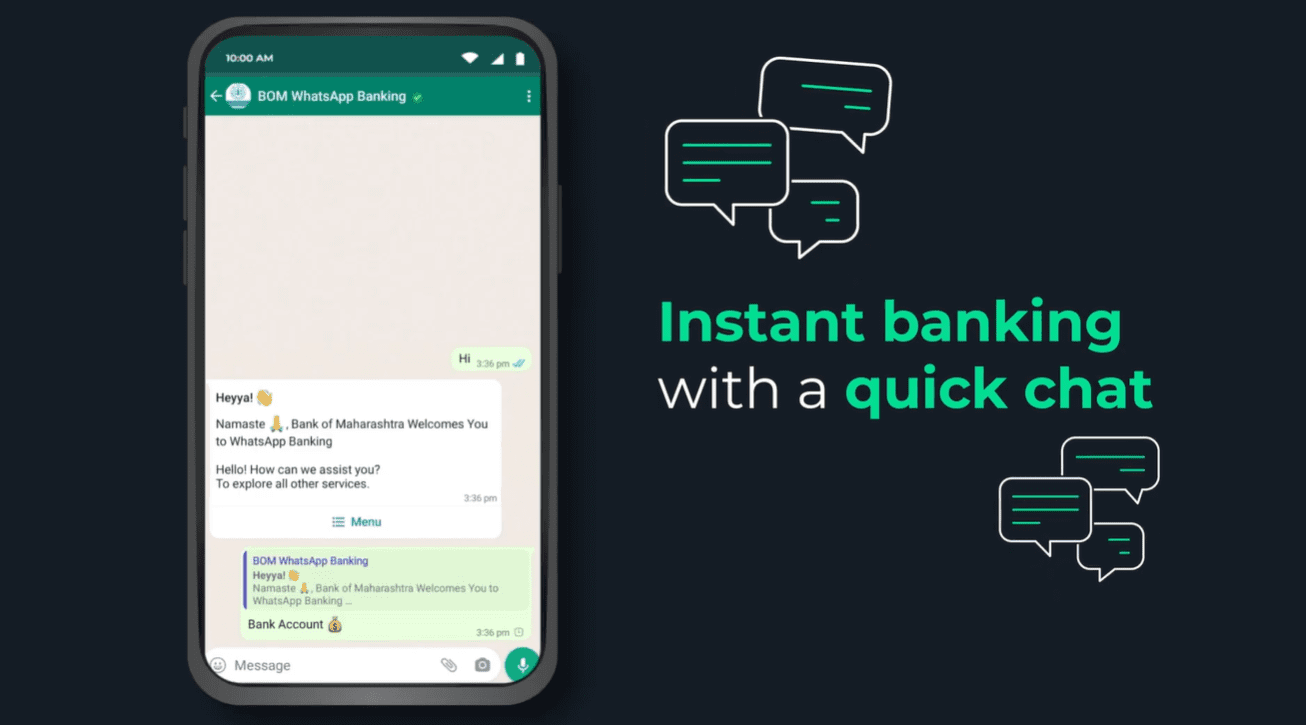
Through this chatbot solution, more than 45 banking services are enabled via chatbot and processed more than 1.2 billion transactions within a year. It has also contributed to an approximately 10% increase in customer engagement.
This has dramatically reduced the footfall across the bank’s network of more than 2000 branches. It demonstrates how conversational interfaces can scale securely in regulated industries while improving both efficiency and customer experience.
Capabilities of Route Mobile’s Roubot
Here are some top capabilities of the Route Mobile’s Roubot:
- Visual chatbot builder: The WhatsApp and RCS chatbot platform offers a self-service, no-code interface where users can build, customize, and publish chatbots in minutes using intuitive drag-and-drop tools.
- Multi-channel support: Roubot provides a seamless experience across multiple messaging channels, including WhatsApp, RCS, Google Business Messages, Viber, Facebook, and Telegram.
- Integration with the backend system and CRM: The platform integrates with various systems to power transactional workflows, including LeadSquared, Shopify, Google Sheets, Gmail, Stripe, and Razorpay.
- Analytics and reporting: Businesses can access real-time bot analytics and a robust dashboard to track agent performance, qualify leads automatically, and conduct A/B testing on conversation flows.
- Handover to live agents: Roubot supports live chat integration, allowing for a smooth transition from automated bot responses to human assistance when a query requires expert intervention
Proven impact across messaging channels
These deployments highlight how businesses are transitioning from one-way notifications to fully interactive, conversational journeys.
You can combine WhatsApp Business Platform and RCS Business Messaging, where Roubot enables:
- Faster resolution of customer queries through automation
- Higher engagement through interactive messaging formats
- Seamless execution of transactions directly within chat
This shift allows enterprises to deliver consistent customer experiences across multiple touchpoints while reducing operational complexity.
Benefits of using Roubot
Here are the primary benefits for businesses using Roubot, which is supported by real-world deployments and platform capabilities:
- Flexibility and control: Users can easily adjust conversation logic, capture updated data like dates and times, and allow customers to control the flow of the interaction.
- Faster time-to-launch of bots: Businesses utilize pre-defined industry templates and can connect their existing workflows to messaging channels and launch their bots with a single click, eliminating the need for lengthy development cycles. This is especially relevant for enterprises deploying large-scale use cases such as ticket booking, banking services, and e-commerce workflows.
- Consistent experience across channels: Roubot ensures that customers receive a uniform and interactive experience regardless of the messaging app they use, helping to build stronger brand relationships and greater message awareness.
To better understand how these capabilities translate into real-world applications, including use cases in industries like fintech, you can explore how fintechs can leverage chatbots to enhance customer interactions.
It will help you understand how businesses can design conversational journeys, integrate backend systems and deploy scalable chatbot solutions using a no-code interface.
How to get started with chatbots?
You need to move through a structured process to get started with chatbots effectively. The process must align the technical setup with your business objectives.
Step 1: Selecting the right platform
You should choose a partner that supports your required channels, like WhatsApp or RCS and integrates seamlessly with your existing CRMs and backend systems.
Step 2: Defining conversational goals
You need to clearly identify a specific business objective, such as lead generation or support, and limit the chatbot to three or fewer well-defined functions to avoid confusing users.
Step 3: Mapping user journeys before building flows
You need to design structured “solution flows” based on common customer inquiries, utilising rich UI elements like buttons and carousels to guide users toward a resolution.
Step 4: Testing and iterations best practises
Businesses need to refine their logic in a test sandbox by training the bot with at least fifty phrase variations per intent before launching a high-volume, low-complexity Minimum Viable Product (MVP)
Step 5: Launch and monitor
Finally, you use conversational analytics to track resolution rates and “none” intents, while employing sentiment analysis to trigger a seamless human handover if a user becomes frustrated.
Conclusion
Chatbots have evolved from historical experiments into strategic business assets that are now essential for maintaining competitive advantage in a digital-first market.
When you integrate AI-powered intelligence with next-generation channels such as WhatsApp and RCS, businesses can deliver fast, personal, and secure interactions that scale beyond the capacity of human agents.
The transition toward Agentic AI and hyper-personalisation ensures that future interactions will move beyond simple Q&A to autonomous task execution and proactive customer assistance.
Ultimately, the most successful chatbots are those designed as evolving conversational strategies, sticking to well-defined functions, prioritising simple user journeys, and always providing a seamless path to human support when needed.
We at Route Mobile, a leading business service provider, provide exceptional WhatsApp and RCS chatbot solutions for businesses. To get started, contact our experts today.