As businesses increasingly rely on conversational experiences, WhatsApp has become one of the most important channels for engaging customers at scale. Customer conversations have evolved from simple support interactions to strategic business touchpoints that influence sales, service, customer retention, and brand loyalty.
This shift has also transformed the technology powering enterprise messaging. Following Meta’s retirement of the WhatsApp On-Premises API in October 2025, the WhatsApp Cloud API is now the standard deployment model for businesses building on WhatsApp Business Platform.
All new platform capabilities, performance improvements, and developer enhancements are now delivered exclusively through the Cloud API. Meta’s migration guidance positions Cloud API as the supported path for both new and existing enterprise deployments. For businesses, this isn’t simply a hosting change. This changes how organizations deploy, manage, secure, and scale their customer communication infrastructure.
The new era of enterprise messaging on WhatsApp
WhatsApp Business Platform has matured into an enterprise-grade communication platform that enables organizations to build customer journeys across marketing, sales, customer support, authentication, and post-purchase engagement.
Powered by the Meta WhatsApp Cloud API, businesses can leverage Meta-hosted infrastructure that simplifies deployment and provides continuous access to the latest platform capabilities and innovations.
Today, organizations leverage WhatsApp Business Platform to:
- Deliver personalized marketing campaigns
- Automate customer support with chatbots and AI
- Send transactional notifications and order updates
- Verify users through authentication messages
- Enable conversational commerce
- Integrate customer conversations with CRM, ERP, and contact center platforms
The platform supports both direct developer integrations and enterprise deployments through Meta-authorized Business Solution Providers (BSPs) like Route Mobile, allowing businesses to choose the implementation approach that best aligns with their technical and operational requirements.
For businesses evaluating the platform, we’ve included a detailed overview of WhatsApp Cloud API pricing and associated cost considerations later in this article.
What changed after the On-Premises API sunset?
For several years, enterprises had two deployment models available:
- Self-hosted (On-Premises API)
- Meta-hosted (Cloud API)
That changed when Meta announced the retirement of the On-Premises API. Before its retirement in October 2025, WhatsApp On-Premises API was primarily adopted by enterprises that required greater control over their deployment environment. Businesses, often with the support of a Meta-authorized Business Solution Provider (BSP), could host the API within their own infrastructure or through a BSP-managed data center.
This approach appealed to organizations with stringent data residency, compliance, or infrastructure requirements, while also allowing greater control over integrations and security configurations.
Today, WhatsApp Business Cloud API has become the standard deployment model. While Meta hosts the underlying infrastructure, enterprises can continue to meet operational, compliance, and integration requirements by working with a WhatsApp BSP that provides managed onboarding, enterprise integrations, governance, and ongoing support on top of the Cloud API.
Key milestones
- January 2024 – Meta announced the deprecation of the On-Premises API and confirmed that future platform innovations would be Cloud-first.
- July 1, 2024 – New businesses could no longer onboard to the On-Premises deployment model.
- October 23, 2025 – The On-Premises API officially reached end of support.
As a result:
- Cloud API became the only supported deployment model
- New platform capabilities are released exclusively for Cloud API
- Existing On-Premises customers migrated to continue benefiting from platform updates and support
For enterprise teams, this simplifies future planning. Rather than deciding between deployment models, the focus has shifted toward determining how to implement Cloud API, either directly with Meta or through a trusted WhatsApp BSP.
Understanding WhatsApp Cloud API
WhatsApp Business Cloud API is Meta’s hosted implementation of the WhatsApp Business Platform.
Unlike the legacy self-managed model, businesses no longer need to provision infrastructure, maintain servers, manage software upgrades, or monitor platform availability. Meta hosts and manages the Cloud API, allowing organizations to focus on building customer experiences rather than maintaining messaging infrastructure.
Businesses can access the Cloud API either by integrating directly with Meta or by working with a Meta-authorized Business Solution Provider (BSP). While the Cloud API continues to run on Meta’s infrastructure in both cases, a WhatsApp Business BSP provides additional enterprise capabilities such as managed onboarding, integrations, automation, analytics, governance, and ongoing support to simplify deployment and operations covered below.
Key characteristics of Cloud API include:
- Fully managed infrastructure
Meta hosts and maintains the messaging infrastructure, reducing operational complexity while ensuring businesses always use the latest supported version of the platform. - Automatic updates
Feature releases, security patches, and platform enhancements are delivered automatically without requiring businesses to perform manual upgrades. - Enterprise scalability
Cloud API is designed to support enterprise-scale messaging workloads while automatically scaling infrastructure based on demand. Performance is governed by WhatsApp’s messaging limits and account quality rather than customer-managed infrastructure. - Standardized APIs
Cloud API follows Meta’s Graph API framework, creating consistency across Meta technologies and simplifying developer adoption. - Enterprise security
Authentication is managed using Meta system user access tokens and business authentication mechanisms, reducing the operational overhead associated with certificate management in legacy environments.
Why Cloud API matters for enterprises
Moving to a managed infrastructure provides benefits beyond operational simplicity. Organizations can:
- Accelerate implementation timelines
- Reduce infrastructure maintenance
- Simplify security management
- Access new platform capabilities immediately
- Reduce upgrade risks
- Focus engineering resources on customer experience rather than platform operations
This becomes particularly valuable for enterprises operating across multiple markets where messaging volumes fluctuate significantly throughout the year. Instead of planning infrastructure capacity for seasonal peaks, businesses can leverage Meta’s managed environment while concentrating on application development and customer engagement strategies.
Accessing WhatsApp Cloud API
Although Cloud API is the only supported deployment model today, businesses still have two implementation approaches.
Direct Cloud API: Integration with Meta
Organizations with experienced engineering teams can integrate directly with Meta using the Cloud API. This approach provides complete control over application development and is often preferred by businesses that:
- Have dedicated software engineering teams
- Build proprietary customer engagement platforms
- Require custom integrations
- Manage DevOps and API development internally
Developers can register a WhatsApp Business Account (WABA), generate access credentials, and build applications using Meta’s developer tools and APIs.
For technology companies building messaging products or highly customized customer engagement platforms, direct integration may provide the flexibility they need.
Working with a Meta Business Solution Provider (WhatsApp BSP)
Many enterprises require more than API connectivity. This is where a Meta-authorized Business Solution Provider (BSP) like Route Mobile plays an important role.
Deploying enterprise messaging often involves business verification, onboarding in addition to value-added services like: customer dashboards, campaign management tools, template management, chatbot platforms, multi-agent inboxes, workflow automation, CRM and contact center connectors, governance, compliance support, multi-team access, analytics and reporting, AI capabilities, monitoring and operational support
For organizations operating across multiple business units or regions, this can significantly reduce deployment complexity while accelerating time to value.
As a Meta-authorized Business Solution Provider, Route Mobile enables enterprises to adopt WhatsApp Business Platform through embedded onboarding, enterprise integrations, automation capabilities, and scalable messaging infrastructure built on the Cloud API.
| Direct Meta Cloud API | Through a Meta BSP |
| Connect directly to Meta’s Cloud API | Connect to Meta’s Cloud API through a Meta-authorized BSP |
| Best for businesses with in-house development expertise | Best for businesses looking for a managed implementation |
| Manage integrations, templates, webhooks, and operations internally | BSP assists with onboarding, integrations, templates, automation, analytics, and support |
| Greater development flexibility | Faster deployment with enterprise-ready tools and services |
| Customizations are built and maintained by your internal team | BSPs can help design, build, and manage custom integrations, workflows, and business-specific use cases |
| Platform documentation and standard support are available through Meta’s developer ecosystem | Dedicated implementation guidance, technical support, and ongoing account management are typically provided by the BSP |
| Meta hosts the Cloud API infrastructure | Meta still hosts the Cloud API; the BSP provides value-added services, not separate hosting |
Enterprise compliance and data residency
For many organizations, adopting a cloud messaging platform involves more than API functionality and scalability. Regulatory compliance, data protection, and governance requirements are often key factors in technology selection, particularly for enterprises operating in regulated industries or across multiple jurisdictions.
As WhatsApp Cloud API is hosted and operated by Meta, the underlying platform benefits from Meta’s global security, privacy, and compliance programs. Organizations evaluating the platform commonly assess areas such as data residency, cross-border data processing, privacy regulations including GDPR and LGPD, and internationally recognized security certifications such as ISO/IEC 27001, SOC 2, and SOC 3.
However, an organization’s overall compliance posture also depends on how it designs, deploys, and governs its own applications, integrations, business processes, and data handling practices.
When implementing WhatsApp Business Platform through a Meta-authorized Business Solution Provider (BSP), enterprises may also receive additional support for governance, auditability, access management, data retention policies, and implementation best practices that help address internal security and regulatory requirements.
These capabilities are particularly valuable for organizations in sectors such as healthcare, banking, financial services and insurance (BFSI), and government, where compliance obligations extend beyond the messaging platform itself and encompass the complete business solution.
This balanced approach ensures that enterprises can leverage Meta’s managed Cloud API infrastructure while implementing the operational controls, governance processes, and compliance measures required by their industry and organizational policies.
WhatsApp Cloud API Pricing
One of the most common misconceptions about the Meta WhatsApp Cloud API is that businesses pay for API access itself. In reality, Meta does not charge businesses to access the Cloud API. Instead, charges are based on messages exchanged over the platform, while any additional platform, integration, or managed services fees depend on whether a business works with a Business Solution Provider (WhatsApp Business BSP).
Meta introduced a per-message pricing model that categorizes conversations by purpose. This model gives businesses greater visibility into messaging costs and allows them to align communication strategies with customer engagement objectives.
Depending on the use case, businesses may incur charges for marketing, authentication, or utility messages sent outside the customer service window, while certain customer service interactions remain free within Meta’s defined policies.
- Marketing messages: promotions, offers, product announcements
- Utility messages: order updates, reminders, transactional notifications
- Authentication messages: OTPs and verification codes
- Service messages: customer service interactions
Since pricing varies by message category and recipient country, organizations should always refer to Meta’s latest pricing documentation when estimating operational costs.
Beyond Meta’s messaging charges, businesses should also consider the total cost of ownership, including:
- Integration and implementation effort
- CRM or contact center integrations
- Automation platforms
- AI capabilities
- Analytics and reporting
- Managed support and consulting
For many enterprises, these operational considerations have a greater impact on long-term value than messaging charges alone.
Enterprise adoption considerations for WhatsApp Cloud API
With the Meta WhatsApp Cloud API now established as the standard deployment model, the focus for enterprises has shifted from migration to maximizing business value. Today’s implementation decisions are less about infrastructure and more about building a scalable, secure, and well-integrated customer engagement ecosystem.
Align Cloud API with your existing technology stack
WhatsApp is most effective when integrated with the systems that power customer interactions across the business. Before implementation, organizations should assess how the Cloud API fits within their existing technology landscape, including:
- CRM platforms
- Contact center solutions
- Marketing automation platforms
- ERP systems
- Identity and authentication services
- Customer data platforms (CDPs)
Choosing an implementation approach that supports these integrations from the outset reduces complexity and enables a more connected customer experience.
Establish governance early
As conversational engagement scales across departments, governance becomes increasingly important. Enterprises should define clear processes for:
- Managing user access and permissions
- Approving message templates
- Maintaining audit trails
- Monitoring API usage and quality ratings
- Ensuring compliance with internal and regulatory policies
Whether managed internally or through a Business Solution Provider (BSP), establishing governance early helps maintain consistency and operational control.
Plan for scale and innovation
Customer engagement requirements evolve rapidly. Organizations should adopt an implementation model that not only supports current messaging volumes but also accommodates future use cases such as AI-powered conversations, customer journeys, authentication, and omnichannel engagement.
With Meta continuously introducing new capabilities through the Cloud API, businesses can innovate without managing underlying infrastructure, allowing teams to focus on delivering richer customer experiences.
Cloud-only capabilities drive innovation
One of the biggest advantages of the Cloud API is continuous access to new platform innovations. Since Meta shifted its development focus to Cloud API, new capabilities have been introduced exclusively for this deployment model.
These include innovations such as:
- WhatsApp Flows for guided customer journeys
- Enhanced authentication capabilities
- Calling API enhancements
- Improved business identity features
- Expanded developer tooling
- Performance improvements across the platform
For businesses, this means adopting Cloud API is not simply about maintaining support; it is also about staying aligned with Meta’s future product roadmap. Organizations that continue modernizing their customer engagement strategy can take advantage of new capabilities as they become available without undertaking major infrastructure upgrades.
FAQs
Is WhatsApp On-Premises API still available?
No. Meta officially ended support for the WhatsApp On-Premises API in October 2025. Businesses should use the WhatsApp Business Cloud API for all new implementations and migrate any remaining legacy deployments.
Is WhatsApp Cloud API free?
Access to the Cloud API itself is free. Businesses pay Meta based on applicable messaging categories, while additional charges may apply for services provided by a Business Solution Provider.
Do I need a Business Solution Provider (BSP)?
Organizations with strong internal engineering capabilities may choose to integrate directly with Meta.
However, enterprises that require managed onboarding, integrations, automation, analytics, compliance support, or omnichannel customer engagement often benefit from working with a Meta-authorized BSP.
Can I use my existing WhatsApp Business phone number with Cloud API?
Businesses can use an existing WhatsApp Business phone number with the Cloud API, provided it is configured and managed according to Meta’s current onboarding requirements. Organizations planning changes to their messaging infrastructure should refer to Meta’s latest onboarding guidance or work with a Meta-authorized Business Solution Provider (BSP).
What if my business was previously using the On-Premises API?
Businesses that previously relied on the On-Premises API should now be operating on the WhatsApp Cloud API, as the On-Premises deployment model reached end of support in October 2025. Organizations that require assistance with their current Cloud API deployment or enterprise integrations can work with a Meta-authorized Business Solution Provider (BSP).
Conclusion
The retirement of the WhatsApp On-Premises API marks more than the end of a deployment model; it reflects Meta’s broader vision for simplifying enterprise messaging through a cloud-first architecture.
Today, the conversation is no longer about choosing between On-Premises and Cloud. The focus has shifted to building scalable, secure, and integrated customer engagement experiences on the WhatsApp Cloud API.
Whether organizations integrate directly with Meta or work with a trusted Business Solution Provider, success depends on selecting an implementation approach that aligns with their technical capabilities, operational requirements, and long-term customer engagement strategy.
For enterprises looking to accelerate adoption while minimizing implementation complexity, partnering with a Meta-authorized Business Solution Provider such as Route Mobile can help streamline onboarding, integrate existing business systems, and unlock the full potential of WhatsApp Business Platform.
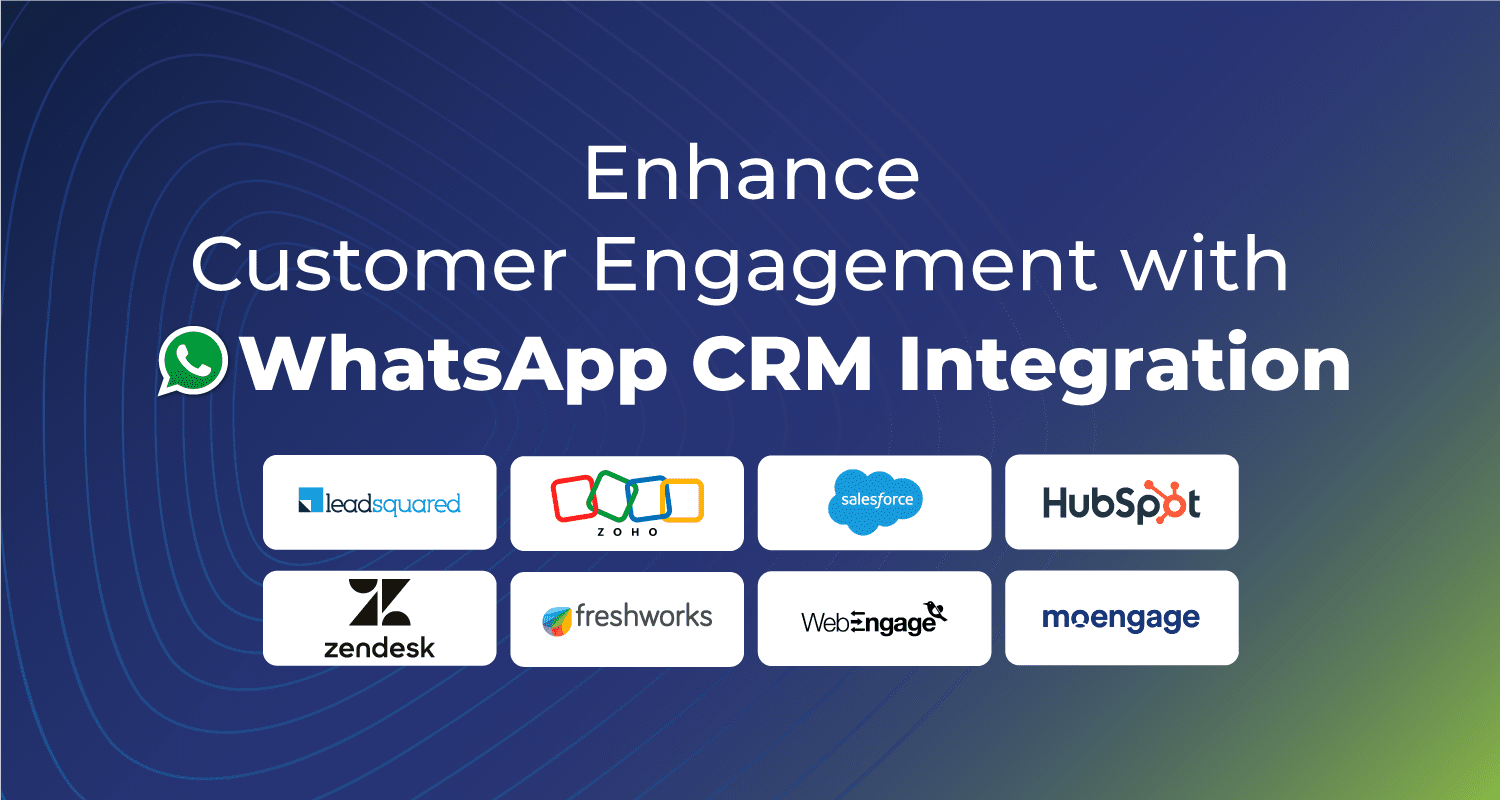
We are certified partners with Meta and leading CRM providers like Leadsquared, Zoho, WebEngage, MoEngage, and CleverTap. We have assisted and improved global communications for over 2000 brands, driving highly scalable, massive campaigns without hiccups.
If you’re interested in learning more about our API hosting services or need help connecting with your existing messaging software or CRM, feel free to Contact Us. We can discuss your specific needs and determine the best value-added services for you.