SMS has long been the default channel for business messaging, but it was never built for today’s security, compliance, or customer trust requirements.
Messages travel as plain text, offer no sender verification, and leave sensitive customer information exposed to interception and fraud.
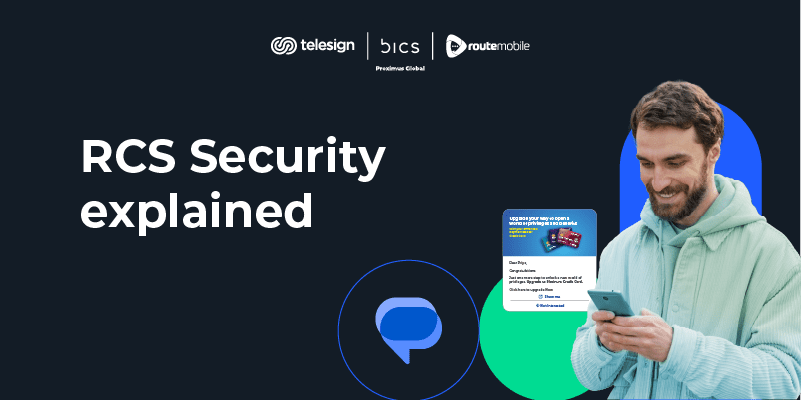
As enterprises move toward richer and more interactive customer conversations, Rich Communication Services (RCS) has emerged as the next evolution of business messaging. RCS enables brands to engage customers with verified, branded, and interactive messages while strengthening security across every interaction.
This shift has made one question central to businesses across industries such as banking, healthcare, travel, and retail! Is RCS encrypted, and can it protect customer data at scale?
Encryption now plays a direct role in how enterprises manage cybersecurity risk, regulatory compliance, and customer trust.
As organisations use messaging to deliver OTPs, payment updates, appointment details, and sensitive notifications, they need assurance that every message remains protected throughout its journey.
With growing global adoption driven by Google and Apple’s support for RCS, secure messaging is no longer optional.
RCS encryption has become a critical enabler for businesses seeking to replace legacy SMS with a future-ready channel for secure, compliant, and high-impact customer communication.
Table of Contents:
- What is RCS Messaging?
- Encryption in RCS: Current state
- Understanding the two layers of RCS encryption
- On-the-wire encryption (TLS)
- End-to-end encryption (E2EE)
- What does this mean for businesses?
- How GSMA standards shape secure messaging
- Understanding the two layers of RCS encryption
- Privacy and data protection in RCS messaging
- Compliance and enterprise readiness with RCS messaging
- Challenges and future outlook for RCS security
- Why choose Route Mobile for secure RCS messaging
- Conclusion
What is RCS Messaging?
Rich Communication Services (RCS) is the evolution of SMS and MMS, built to support secure, interactive, and branded business messaging within the native messaging app on a user’s phone.
Unlike traditional SMS, RCS enables enterprises to engage customers with verified sender identities, rich media, and interactive features, while ensuring messages remain protected in transit via RCS encryption.
This makes it especially valuable for businesses that rely on messaging to share sensitive or time-critical information.
RCS bridges the gap between legacy SMS and OTT messaging apps. It delivers the interactivity of chat apps with the reach and reliability of carrier networks, while offering stronger security and compliance alignment than plain-text SMS.
For enterprises looking to modernise customer communication without sacrificing trust, security, or regulatory readiness, RCS provides a future-ready messaging foundation.
How RCS compares to SMS and OTT apps
When enterprises evaluate secure customer messaging, the comparison between SMS, OTT apps, and RCS quickly highlights why security and control matter.
SMS was never designed for secure communication. Messages travel as plain text, lack encryption, and offer no sender verification.
This creates exposure to spoofing, phishing, and interception, especially for use cases like OTPs, transaction alerts, or account notifications.
OTT messaging apps such as WhatsApp or iMessage improve security through end-to-end encryption and rich features.
However, they operate within closed ecosystems, which can limit enterprise control, regulatory visibility, and interoperability with telecom networks.
RCS combines the strengths of both models by delivering carrier-grade reach with app-like interactivity, while improving security and trust for business messaging:
- Messages are protected in transit using RCS encryption
- Verified sender identities help prevent spoofing and fraud
- Branded messaging allows customers to instantly recognise legitimate communication.
- Native inbox delivery removes dependency on third-party apps.
For businesses, this makes RCS a more secure and scalable alternative to SMS, without the constraints often associated with OTT platforms.
Encryption in RCS: Current state
As businesses use RCS for transactional alerts, support conversations, and sensitive notifications, one question consistently comes up:
Is RCS secure and protected from misuse?
The answer is yes, but with important nuances around how encryption is applied and how close the ecosystem is to achieving complete end-to-end protection.
Understanding the two layers of RCS encryption
RCS messages can be protected in two distinct ways, and understanding this difference is crucial when evaluating how secure the channel really is:
On-the-wire encryption (TLS)
All RCS messages use transport-layer RCS chat encryption to secure data as it moves between devices, carrier networks, and messaging platforms. This prevents unauthorised interception during transmission and protects customer information from common cyber threats.
End-to-end encryption (E2EE)
The gold standard for secure messaging, E2EE encrypts messages on the sender’s device and decrypts them only on the recipient’s device, ensuring no third party can access them.
While many OTT apps already utilise this model, RCS encryption with full end-to-end encryption (E2EE) support is still rolling out across networks and devices.
Today, encryption in transit is available across all RCS traffic, making RCS significantly more secure than plain-text SMS.
End-to-end encryption support continues to expand as the ecosystem matures.
What-does-this-mean-for-businesses
From a commercial and risk perspective, this level of encryption already delivers meaningful value:
- It reduces exposure to interception and data leakage compared to SMS
- It supports secure delivery of OTPs, transaction alerts, and service notifications.
- It aligns RCS with enterprise cybersecurity and risk-management strategies.
For industries that operate under strict security and compliance expectations, such as banking and financial services, healthcare, government, and retail, RCS provides a safer messaging foundation today, with a clear path toward stronger encryption standards in the future.
How GSMA standards shape secure messaging
The GSMA Universal Profile defines how RCS should work across devices, networks, and providers.
It sets the security requirements, including encryption protocols and identity verification standards.
- GSMA is introducing a new specification based on Messaging Layer Security (MLS).
- MLS aims to make RCS message encryption truly interoperable, so messages stay protected no matter which devices, clients, or carriers are involved.
- Adoption is still in progress. Some carriers and messaging platforms are more supportive of MLS than others.
- Until then, businesses can expect variations in how encryption is applied across markets and devices.
This means that universal end-to-end encryption is on the way, but its deployment will be gradual.
Enterprises should plan for a mixed environment in which encryption capabilities vary based on network and device conditions.
Privacy and data protection in RCS messaging
Encryption alone does not define secure business messaging. Privacy and data protection also depend on how platforms handle customer information throughout the messaging lifecycle.
As enterprises use RCS for transactions, authentication, and customer support, robust privacy controls and responsible data practices are essential.
How RCS handles user data vs. other messaging platforms
Traditional SMS offers minimal protection. Messages travel as plain text, provide no sender authentication, and expose businesses to interception, spoofing, and data misuse.
OTT messaging apps improve privacy through end-to-end encryption, but they often rely on extensive user data, profile information, or closed ecosystems that reduce enterprise visibility and governance control.
RCS takes a different approach. It focuses on secure message delivery with minimal data dependency, making it better suited for regulated and trust-sensitive communication:
- Uses only essential data required for message delivery
- Applies encryption in transit to protect message content
- Avoids unnecessary tracking or profiling of end users
This model helps enterprises reduce data exposure while maintaining secure, scalable communication.
Building trust with verified sender identities and branded messages
Privacy also depends on message authenticity. RCS strengthens trust by ensuring customers can clearly identify legitimate business communication.
- Verified sender IDs confirm that messages come from an authenticated business.
- Branded messaging displays the business name and logo in the inbox.
- Anti-spoofing controls reduce phishing and impersonation risks.
These trust signals play a direct role in protecting customers and reducing fraud, especially in industries where identity assurance is critical.
How enterprise RCS platforms support privacy and compliance
Enterprise-grade RCS platforms are built with privacy-first architecture and strict data governance practices.
Platforms like Route Mobile support privacy and data protection through:
- Secure, encrypted APIs for system integrations
- Controlled data handling aligned with global privacy regulations
- Infrastructure designed to support compliant storage, processing, and access
Together, these capabilities help enterprises treat messaging as a secure extension of their broader cybersecurity and data protection strategy.
Compliance and enterprise readiness with RCS messaging
For enterprises operating in regulated environments, secure messaging must go beyond encryption. It must support compliance, auditability, and governance across every customer interaction.
As messaging becomes a core channel for transactions, authentication, and service updates, organisations need assurance that their communication infrastructure meets regulatory and security expectations.
Why compliance matters in modern messaging
Data privacy regulations worldwide are becoming increasingly stringent. Businesses that process personal information must demonstrate how they collect, store, and use that data.
Failure to comply with these regulations can result in heavy fines, legal action, and loss of customer trust.
RCS helps enterprises address these challenges by embedding compliance and governance features into the messaging layer itself.
This ensures that conversations are not only RCS-encrypted but also meet industry standards for data handling and security.
Key regulatory frameworks supported by RCS
Most enterprise messaging platforms built on RCS are specifically designed to comply with global and industry-specific regulations. These include:
- GDPR (General Data Protection Regulation): Sets strict requirements for transparency, consent, and lawful processing of personal data in the EU.
- CCPA (California Consumer Privacy Act): It allows users to have control over how their personal data is collected, shared, or deleted.
- HIPAA (Health Insurance Portability and Accountability Act): Ensures the secure handling of sensitive healthcare data in the United States.
- ISO 27001: Sets international standards for information security management systems.
RCS aligns with these regulations to provide a messaging framework that meets both consumer privacy expectations and enterprise legal obligations.
Enterprise features that support compliance
RCS platforms, including Route Mobile’s solution, offer a range of features that help enterprises maintain compliance across large-scale messaging operations:
- Audit trails: Every message interaction can be tracked and recorded, ensuring visibility into communication flows for regulatory reporting.
- Secure integrations: APIs and system connections are protected by RCS encryption, reducing the risk of data leaks or unauthorised access.
- Identity verification: Verified sender IDs ensure only authorised entities send messages, reducing fraud and maintaining compliance with anti-spoofing standards.
- Policy enforcement: Enterprises can set rlies for message retention, content handling, and access control to align with internal governance requirements.
These features ensure that RCS is more than just a secure messaging channel.
It’s a compliance-ready platform that supports enterprise-scale communication in regulated environments.
Top capabilities of RCS for businesses
RCS enables enterprises to move beyond basic text messaging while maintaining strong security, trust, and operational control.
Its core capabilities focus on helping businesses communicate safely and effectively with customers at scale. Some of them are:
- Verified sender identity: It ensures messages come from an authenticated business, reducing spoofing and fraud.
- Branded messaging: Displays the business name and logo in the inbox, helping customers instantly recognise legitimate communication.
- Interactive messaging: It allows customers to take secure actions directly within the message, improving response rates and reducing errors.
- Built-in security: Messages are protected in transit using RCS encryption, with ongoing progress toward stronger end-to-end protection.
- Enterprise integration: Secure APIs enable seamless connection with backend systems for large-scale, compliant messaging.
With Route Mobile’s RCS Business Messaging platform, enterprises can easily integrate rich messaging, verified sender features, and RCS-encrypted communication into their customer journeys, all through secure, API-driven workflows.
Use cases of RCS for businesses.
RCS’s versatility makes it valuable across multiple business scenarios. Here are some of the most common and impactful use cases:
- Transactional messaging: Secure delivery of OTPs, payment confirmations, account updates, and service alerts where message integrity and authenticity matter.
- Customer support and service updates: Two-way messaging that allows customers to interact with verified businesses within a secure, native messaging environment.
- Document and information sharing: Safe distribution of invoices, tickets, policy documents, or appointment details without exposing sensitive data.
- Engagement and action-based journeys: Interactive messages that guide users through confirmations, bookings, or follow-ups while maintaining trust and security.
For industries such as banking and financial services (BFSI), healthcare, hospitality, travel, legal, and government, these use cases show how RCS supports secure, trusted customer communication without relying on plain-text SMS.
Challenges and future outlook for RCS security
RCS is fast becoming a secure, feature-rich alternative to SMS, with exciting advancements still on the horizon.
Businesses adopting RCS should understand the current limitations, the evolving standards, and the direction the technology is heading.
This helps them plan for future-proof messaging strategies that remain safe, scalable, and compliant.
Fragmentation across devices, carriers, and networks
One of the biggest challenges for RCS, causing RCS security issues today, is ecosystem fragmentation.
Unlike closed messaging apps, RCS depends on a complex ecosystem of device manufacturers, mobile operators, messaging platforms, and operating systems, all of which must support the same standards for consistent performance and security.
- Not all devices support the latest RCS features or encryption protocols.
- Some carriers roll out RCS updates at different speeds, leading to inconsistent functionality across regions.
- Specific networks still lack support for advanced capabilities such as RCS encryption or rich media delivery.
End-to-end encryption adoption progress
RCS messaging already benefits from encryption in transit, providing a strong security foundation today. As the ecosystem continues to mature, full end-to-end encryption is being progressively rolled out across devices, carriers, and platforms.
This advancement is supported by ongoing improvements in device compatibility, carrier infrastructure upgrades, and increasing cross-platform interoperability. Industry bodies such as the GSMA are actively driving standardisation efforts to ensure end-to-end encryption becomes more consistent, scalable, and widely available across the RCS ecosystem.
How is Route Mobile preparing for the future?
As the RCS ecosystem evolves, Route Mobile is investing heavily in future-proof security and interoperability to support enterprise-grade deployments. Key focus areas include:
- Adopting new encryption standards: Route Mobile is aligning its platform with GSMA’s MLS framework to enable true cross-platform RCS encryption once widely adopted.
- Improving interoperability: Continuous integration with carriers and device manufacturers ensures consistent feature availability and security across regions.
- Advanced security layers: Features like verified sender IDs, policy enforcement, and encrypted APIs are being enhanced to meet evolving enterprise security requirements.
- Scalable fallback solutions: Route Mobile supports intelligent fallbacks to SMS or OTT channels when RCS is unavailable, ensuring reliable delivery without compromising user experience.
Since Route Mobile addresses these challenges early, businesses can adopt RCS with confidence, knowing their messaging infrastructure will remain secure, compliant, and future-ready as the technology evolves.
Why choose Route Mobile for secure RCS messaging
As enterprises move from legacy SMS to richer and more secure messaging channels, the choice of RCS provider plays a critical role in long-term success.
Beyond message delivery, businesses need a platform that supports security, compliance, scalability, and future readiness.
Route Mobile’s RCS Business Messaging platform is built to meet these enterprise requirements while supporting secure customer communication at scale.
Key differentiators that set Route Mobile apart
- Security-first architecture: Route Mobile ensures all RCS messages are protected in transit with encryption and is ready to support evolving end-to-end encryption standards as they become widely available.
- Verified and trusted business messaging: Built-in sender verification and brand authentication help enterprises protect customers from fraud, spoofing, and impersonation.
- Enterprise-grade integrations: Secure APIs and platform flexibility allow RCS to integrate seamlessly with CRM systems, customer engagement platforms, and backend applications.
- Omnichannel communication support: RCS works alongside SMS and other messaging channels, enabling consistent customer journeys even when RCS is unavailable on certain devices or networks.
- Global scale and reliability: Designed for high-volume, mission-critical messaging, the platform supports enterprises operating across regions, industries, and regulatory environments.
Conclusion
As customer messaging becomes more central to business operations, security, privacy, and compliance can no longer be treated as afterthoughts.
Enterprises need messaging channels that protect sensitive information, reduce fraud risk, and support regulatory requirements while still delivering engaging customer experiences.
RCS addresses these needs by combining the reach of SMS with richer interactivity and stronger security controls. With messages encrypted in transit, verified sender identities, and growing support for advanced encryption standards, RCS offers a more secure foundation for modern business communication.
While the ecosystem continues to evolve, especially around end-to-end encryption, the direction is clear. RCS is emerging as a future-ready alternative to legacy messaging, designed to meet the expectations of both customers and enterprises.
We at Route Mobile are a leading cloud communications and business messaging provider, offering advanced RCS solutions that help enterprises deliver secure, compliant, and high-impact customer experiences across every stage of their digital journey. Contact our experts to get started!