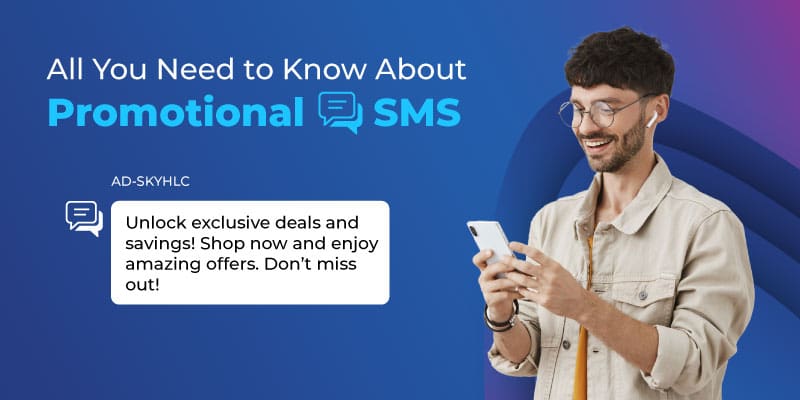
Promotional SMS remains one of the most effective ways for businesses to reach customers instantly and drive engagement. Whether you’re announcing a new product, promoting a limited-time offer, or encouraging repeat purchases, SMS enables brands to deliver timely messages directly to customers’ mobile phones.
Unlike many digital marketing channels, SMS offers unmatched visibility and immediacy. With open rates reaching as high as 98% and response rates significantly higher than email and other forms of communication, it’s no surprise that businesses across industries rely on SMS marketing to connect with their audiences. In fact, many consumers actively opt in to receive promotional text messages from brands they trust.
In this guide, we’ll explore what promotional SMS is, how it works, activation and compliance requirements, best practices, and strategies for creating high-performing SMS campaigns.
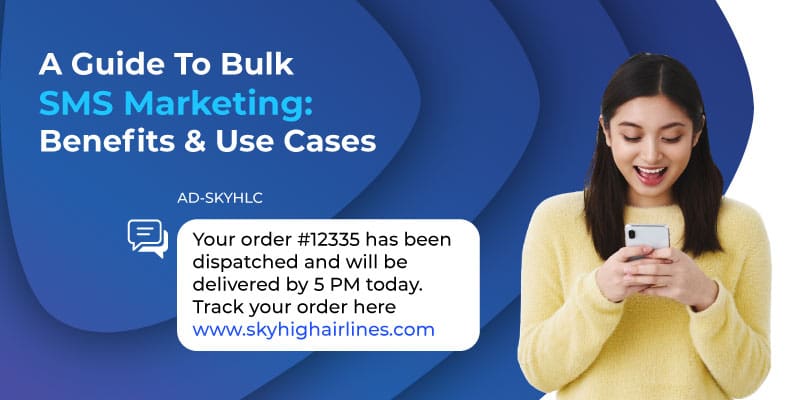
To learn more about how SMS drives customer engagement and conversions, explore our guide on bulk SMS marketing benefits and use cases.
What is promotional SMS
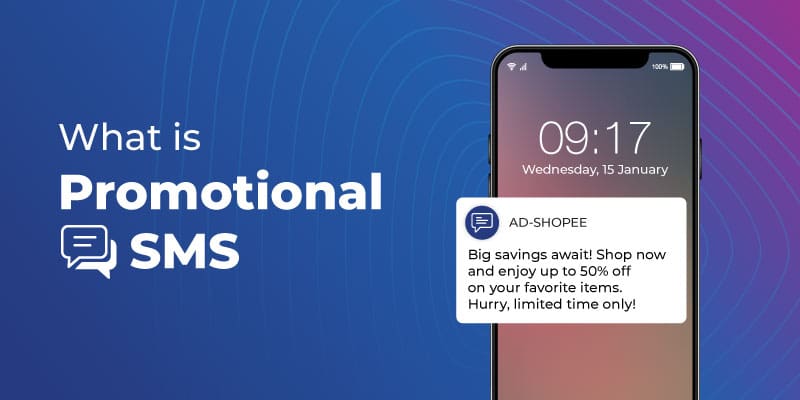
Promotional SMS are messages used to market and advertise products or services. It is often interchangeably used as promotional text messages or SMS marketing.
Businesses can use promotional SMS to inform customers about new product launches, discounts, upcoming events, sales announcements, special offers, etc.
Leveraging effective SMS features such as responsiveness, immediacy and high engagement, companies interact with their prospects for marketing or promotional purposes.
For this, businesses need advanced features like SMS API, automation, bulk messaging and SMS templates to create their marketing campaign. Choosing the right SMS API platform, like Route Mobile, is paramount to achieving monumental outcomes for your promotional SMS practices.
Here are a few common promotional SMS examples:
Welcome offer SMS
Welcome to StyleHub! Enjoy 15% OFF your first order. Use code WELCOME15 at checkout. Shop now: bit.ly/shop
Flash sale SMS
Flash Sale Alert! Get up to 50% OFF selected products for the next 24 hours only. Shop before it’s gone: bit.ly/sale
Seasonal promotion SMS
Celebrate the festive season with exclusive savings! Enjoy 20% OFF sitewide until 31 December. Start shopping today: bit.ly/festive
These examples highlight how promotional SMS messages are typically short, action-oriented, and designed to encourage immediate customer engagement.
Looking for more inspiration? Browse these 15 promotional SMS examples and templates to create effective campaigns for different industries and use cases.
Promotional SMS vs transactional SMS: Understanding the key differences
| Feature | Promotional SMS | Transactional SMS |
| Purpose | Promote products, services, offers, events, and marketing campaigns | Deliver critical information related to a customer transaction or service |
| Consent required | Yes, customers must typically provide explicit opt-in consent before receiving marketing messages | Often sent as part of an existing customer relationship or transaction |
| Timing | Subject to marketing communication regulations and permitted sending hours | Can be sent whenever important information needs to be communicated |
| Examples | Discount offers, flash sales, product launches, event invitations, loyalty rewards | OTPs, payment confirmations, account alerts, order updates, password resets |
| Regulations | Governed by marketing and privacy regulations, including opt-out requirements | Governed by service communication and data protection regulations |
| Character limits | Standard SMS length of 160 characters per message segment | Typically follows the same SMS character limits as promotional messages |
If you’d like to learn more about service-related messaging, read our guide to transactional SMS best practices.
What are the benefits of promotional SMS?
Here are the benefits of promotional SMS:
- High deliverability and open rates: Promotional SMS is delivered directly to customers’ mobile devices, helping businesses cut through crowded inboxes and social media feeds. This ensures important offers and updates are more likely to be seen promptly.
- Fast delivery: SMS messages are typically delivered within seconds, making promotional SMS ideal for flash sales, limited-time offers, event reminders, and other time-sensitive campaigns.
- High Click-through Rates (CTR): With a clear call to action and a direct link, promotional SMS can drive immediate customer action, whether it’s making a purchase, registering for an event, or visiting a website.
- Opt-in and opt-out management: Promotional SMS is a permission-based channel that allows customers to choose the communications they receive. Easy opt-out mechanisms help businesses stay compliant while maintaining customer trust.
- Cost effective marketing solution: Promotional SMS enables businesses to reach large audiences without the high costs associated with many traditional advertising channels, making it an efficient way to maximize marketing ROI.
Industry research continues to highlight the effectiveness of SMS as a marketing channel. Explore these latest SMS marketing statistics and trends for additional insights.
What are the use cases of promotional SMS?
Here’s how companies use promotional SMS to send:
- New product releases: Announce new products, features, or services directly to customers and drive immediate interest with launch offers or exclusive access.
- Welcome messages: Greet new subscribers with a warm welcome and a special discount or offer to encourage their first purchase.
- Sales announcements: Promote seasonal sales, festive campaigns, and special shopping events to boost traffic and conversions.
- Event registrations: Invite customers to webinars, workshops, product launches, or in-store events with a quick registration link.
- Customer surveys and feedback: Collect valuable customer feedback after a purchase or interaction to improve products and customer experiences.
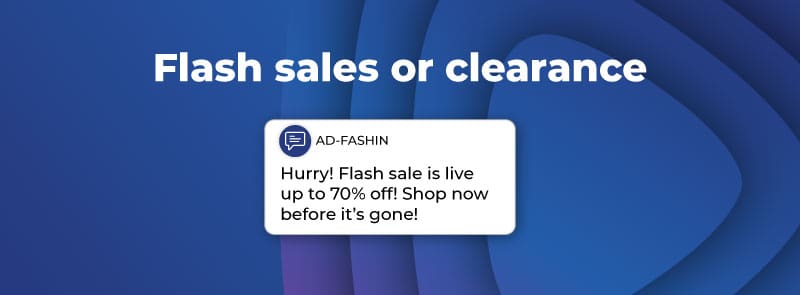
- Flash sales: Create urgency with limited-time offers and encourage customers to act before the deal expires.

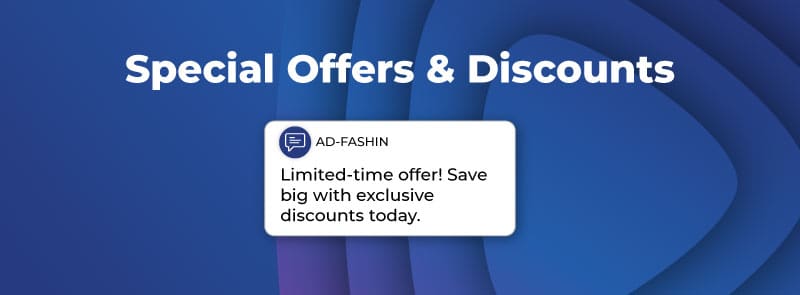
- Time-sensitive discounts and offers: Share exclusive coupons, seasonal promotions, and short-term deals that drive immediate purchases.
- Personalised product recommendations: Send tailored offers based on customer preferences or past purchases to increase engagement and sales.
- Cart abandonment reminders: Recover lost sales by reminding customers about items left in their cart and offering an incentive to complete the purchase.
- Loyalty and VIP offers: Reward loyal customers with exclusive discounts, early access to sales, and special member-only benefits.
- Appointment reminders with offers: Combine appointment reminders with relevant promotions, such as discounts on additional services or upgrades.
For additional real-world examples of business messaging campaigns, see our guide on bulk SMS marketing benefits and use cases.
When to run promotional SMS campaigns
Timing can significantly impact the success of your promotional SMS campaigns. Sending messages when customers are most likely to engage can improve click-through rates (CTR), conversions, and overall campaign performance.
- Send at the right time: Late mornings and early evenings often work well for promotional SMS campaigns, as customers are more likely to check and respond to messages during these periods. Avoid sending messages too early or late at night.
- Choose the right day: Retail promotions and weekend sales often see stronger engagement when announced on Thursdays or Fridays, while B2B campaigns typically perform better during weekdays.
- Align with key events and seasons: Promotional SMS is highly effective for seasonal campaigns, holidays, product launches, flash sales, and limited-time offers where timing and urgency matter.
- Test and optimise: There’s no single best time for every audience. Monitor campaign performance and test different send times to identify what works best for your customers.
For additional guidance on campaign planning and optimization, explore these SMS marketing best practices.
How to send promotional SMS
Running a successful promotional SMS campaign doesn’t have to be complicated. Follow these seven steps to reach the right audience, stay compliant, and maximize results.
Step 1: Choose a promotional SMS service provider
Start by selecting a reliable promotional SMS service provider that offers high deliverability, compliance support, audience segmentation, campaign scheduling, and performance tracking. A trusted platform such as Route Mobile can help businesses launch, manage, and optimize promotional SMS campaigns at scale.
Step 2: Build an opted-in subscriber list
Promotional SMS should only be sent to customers who have explicitly agreed to receive marketing messages. Grow your subscriber list through website sign-ups, mobile apps, online forms, loyalty programmes, and in-store opt-ins.
Step 3: Segment your audience
Not every offer is relevant to every customer. Segment your audience based on factors such as location, demographics, purchase history, interests, or engagement levels to deliver more personalized and effective campaigns.
Step 4: Write a clear and compelling message
Keep your message short, relevant, and action-oriented. Highlight the offer, create urgency where appropriate, and include a clear call to action. Need inspiration? Explore these 15 promotional SMS examples for proven message formats.
Step 5: Ensure compliance
Before sending, ensure your campaign complies with local regulations and messaging requirements. This includes providing an opt-out option, using approved sender IDs, and following regulations such as DLT (India), TCPA (US), and GDPR (EU).
Step 6: Schedule and send
Choose the right time to reach your audience. Schedule campaigns during hours when customers are most likely to engage, while taking time zones and local regulations into account.
Step 7: Measure and optimize
Track key metrics such as delivery rates, click-through rates (CTR), conversions, and opt-outs to understand campaign performance. Use these insights to refine future campaigns and improve results. Learn more about the [10 essential SMS marketing metrics] you should monitor.
Also Read: 10 Essential Metrics For Measuring The Impact Of Promotional SMS Campaigns
Pro tips to write effective promotional SMS
1. Maintain professionalism
Keep your SMS clear, respectful, and aligned with your brand voice. Avoid excessive slang, abbreviations, capital letters, or punctuation, and use emojis only when they genuinely add value. A professional tone builds trust and makes your messages feel credible.
2. Write short and precise messages
SMS gives you limited space to communicate, so focus on the most important information. Get straight to the point and avoid unnecessary details. Concise messages are easier to read and more likely to drive action.
3. Include a clear call to action (CTA)
Tell recipients exactly what you want them to do next, whether it’s “Shop Now”, “Claim Your Discount”, or “Register Today”. A strong CTA removes guesswork and increases conversions.
4. Start with an attention-grabbing opening
Use a compelling offer, benefit, or question at the beginning of your message to capture attention immediately. Then clearly explain the value for the customer. The first few words determine whether people keep reading or ignore the message.
5. Get permission before sending
Only send promotional SMS to customers who have explicitly opted in to receive marketing messages. Follow all applicable consent and messaging regulations. Permission-based messaging improves engagement and helps maintain compliance.
6. Create a sense of urgency
Encourage immediate action with limited-time offers, countdowns, or exclusive deals. Highlighting scarcity can make promotions more compelling. Urgency helps reduce procrastination and boosts response rates.
7. Personalize your messages
Use customer data such as names, preferences, location, or purchase history to make messages more relevant. Personalization can also be enhanced through audience segmentation and automation. Relevant messages feel more valuable and typically generate better engagement.
8. Include a clear sender ID or brand name
Make it immediately obvious who the message is from by using a recognized sender ID or mentioning your brand name in the SMS. Clear branding increases trust, improves recognition, and helps recipients confidently engage with your message.
Promotional SMS compliance and regulations
- Opt-In and consent: Always get explicit permission before sending promotional SMS. Customers should actively opt in through a website form, app, checkout page, or keyword subscription.
- Opt-out requirements: Every promotional SMS should include an easy way to unsubscribe, such as replying STOP. Opt-out requests must be honored promptly.
- Time-window restrictions: Send messages only during permitted business hours and according to the recipient’s local time zone. This helps maintain compliance and improves customer experience.
- Sender ID rules: Use a recognized sender ID or brand name so recipients immediately know who the message is from. In many countries, sender IDs must be registered before use.
- United States (TCPA & 10DLC): Businesses must obtain prior express written consent before sending promotional texts and register campaigns under 10DLC to improve deliverability and comply with carrier requirements.
- India (DLT): Businesses must register their organization, sender IDs, and message templates on the DLT platform before sending promotional SMS. This helps reduce spam and improve transparency.
- European Union (ePrivacy Directive & GDPR): Promotional SMS generally requires prior consent under the ePrivacy Directive, while GDPR governs how customer data is collected, processed, stored, and protected. Recipients must also be able to withdraw consent easily.
- United Kingdom (PECR): PECR governs electronic marketing communications in the UK and requires businesses to obtain appropriate consent before sending promotional SMS.
- United Arab Emirates (TDRA): Businesses must comply with TDRA regulations, use approved sender IDs, and obtain customer consent before sending marketing messages.
Conclusion
Any text message sent to prospects to sell, promote or advertise is simply a promotional SMS. Promotional SMS also leverages the effectiveness of SMS communication channels for business, ranging from high open rates to convenience. It further translates into improving customer engagement and boosting sales significantly.
Collaborate with a leading cloud communication service provider like us to achieve the best results. We at Route Mobile are known for simplifying business communications using our diverse range of SMS-based services, such as A2P messaging, 2-way messaging and more. Contact our experts today to get started.
FAQs
What is promotional SMS?
Promotional SMS is a type of text message businesses send to promote products, services, special offers, events, or brand updates. It is designed to engage customers, drive website traffic, generate leads, increase sales, and strengthen customer relationships. Businesses use promotional SMS because it offers high open rates, immediate visibility, and direct communication with customers on their mobile devices.
What Is the difference between promotional SMS and transactional SMS?
Promotional SMS is sent to engage customers for marketing purposes, including lead generation, sales, driving traffic, sign-ups, and brand awareness. In contrast, transactional SMS is more about delivering critical information to customers without marketing goals such as password reset, account information, OTP, delivery updates, etc.
How do I activate promotional SMS?
To activate promotional SMS, businesses typically need to register with a trusted SMS service provider, complete any required sender registration processes, and comply with local messaging regulations. Once your account is set up, you can create SMS campaigns, import subscriber lists, manage consent records, and start sending promotional messages to opted-in customers through a web platform or API integration.
How do I stop promotional SMS?
Customers can usually stop receiving promotional SMS by following the opt-out instructions included in the message, such as replying with keywords like “STOP,” “UNSUBSCRIBE,” or “OPT OUT.” Businesses are required to honor these requests promptly and maintain accurate suppression lists. Providing a simple opt-out process helps organizations remain compliant while improving customer trust and engagement quality.
Is promotional SMS marketing legal?
Yes, promotional SMS marketing is legal in most countries when businesses comply with applicable regulations and obtain customer consent before sending messages. Laws typically require clear opt-in mechanisms, transparent sender identification, and easy opt-out options. Since regulations vary by region, businesses should ensure their SMS marketing practices align with local requirements to avoid compliance risks and maintain consumer trust.
What is the best time to send promotional SMS?
The best time to send promotional SMS depends on your audience, industry, and campaign objectives. Generally, messages sent during normal business hours or early evenings tend to perform well because recipients are more likely to read and engage with them. Testing different time slots and analyzing campaign performance can help identify the optimal sending time for your specific customer base.
How do I get consent for promotional SMS?
You need explicit customer consent before sending promotional SMS messages. This consent can be collected through website forms, checkout pages, mobile apps, loyalty programmes, event registrations, or dedicated SMS opt-in campaigns. Businesses should clearly explain what customers are signing up for and retain consent records to demonstrate compliance with messaging regulations and industry best practices.
What’s the character limit for promotional SMS?
A standard SMS message supports up to 160 characters using the GSM character set. Messages exceeding this limit are typically sent as concatenated SMS, which appear as a single message on the recipient’s device but are billed as multiple message segments. Keeping promotional SMS concise helps improve readability, engagement, and overall campaign effectiveness.
How much does promotional SMS cost?
The cost of promotional SMS varies depending on factors such as destination country, message volume, sender type, and SMS provider. Many providers offer volume-based pricing, where the cost per message decreases as campaign size increases. Businesses should also consider costs related to compliance, premium sender IDs, and international delivery when budgeting for SMS marketing campaigns.
How do I grow my promotional SMS subscriber list?
To grow your promotional SMS subscriber list, offer clear value in exchange for sign-ups, such as exclusive discounts, early product access, loyalty rewards, or useful content. Promote SMS subscriptions across your website, mobile app, social media channels, email campaigns, and point-of-sale interactions. Simplifying the opt-in process and communicating benefits clearly can significantly improve subscription rates and long-term engagement.